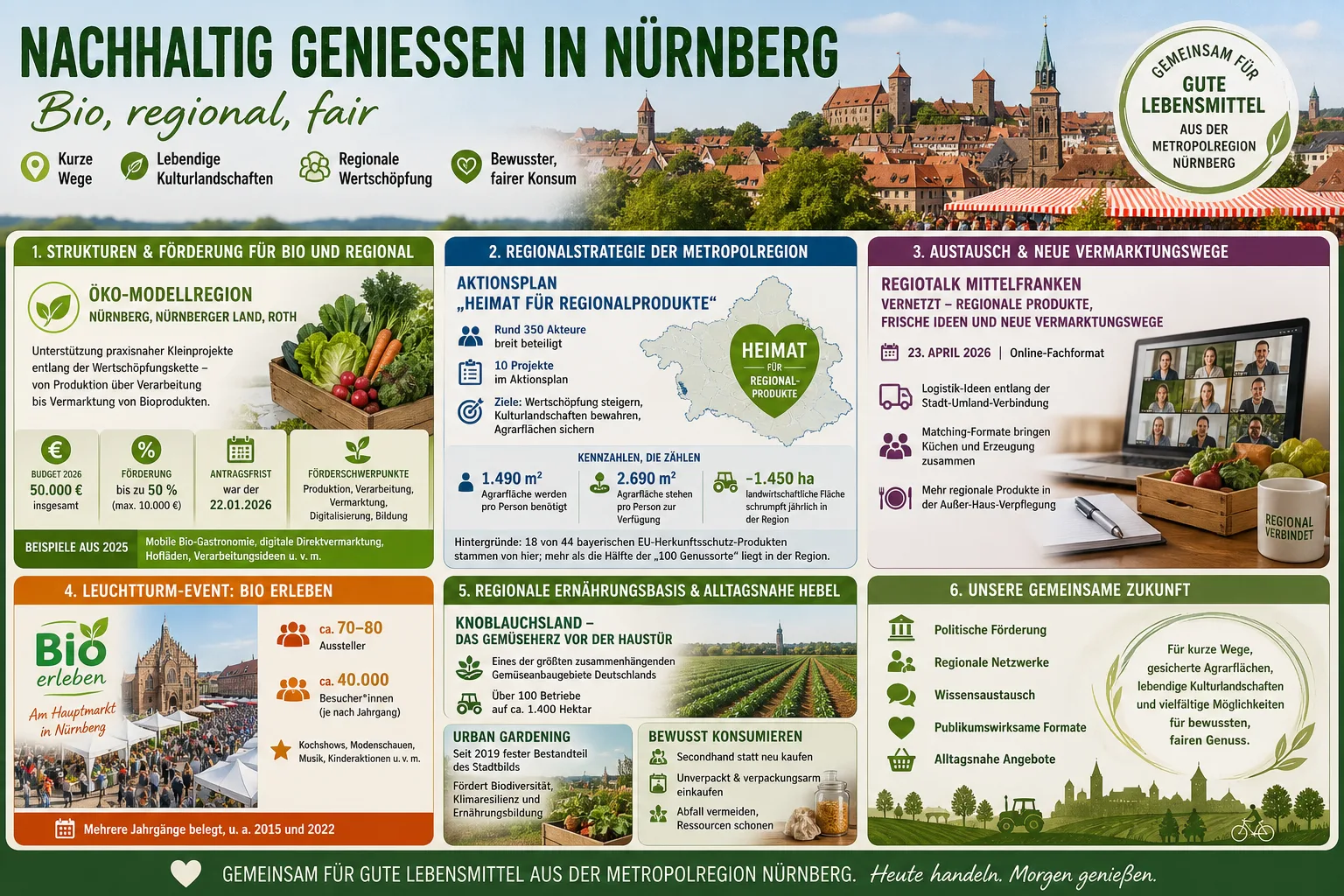
Sustainable enjoyment in Nuremberg: regional and organic
Sustainable enjoyment in Nuremberg: Organic, regional, fair – your roadmap for the coming months
If you want to eat and shop more consciously in Nuremberg in the coming weeks and months, you can do so in a way that benefits regional businesses, makes supply chains more transparent, and gives fairly traded products a permanent place in your everyday life. This overview focuses on what you can specifically do, visit, and follow in the future – as a local or as a guest.
Why your next shopping trip in Nuremberg is especially worthwhile
Sustainable enjoyment doesn't just start on the plate, but beforehand: with the choice (organic/conventional), the origin (regional/imported), the working conditions (fair/unfair), and the way you shop (low packaging, seasonal, planned instead of spontaneous). In Nuremberg, you can bundle these decisions more easily in the future if you set yourself a simple rhythm: market day, coffee day, cooking day, "leftovers day".
- Organic helps you reduce the use of certain synthetic pesticides and make standards traceable (e.g., EU organic logo).
- Regional can shorten routes and strengthen local value creation – especially when you buy directly from producers or businesses in the area.
- Fair becomes tangible when you look for recognized seals for coffee, cocoa, tea, or bananas and choose providers who explain their sourcing.
How to plan "organic, regional, fair" in the future – without pressure for perfection
For the next few months, a realistic approach is often more effective than a radical one: Start with two to three fixed rules that you stick to in everyday life.
- One meal per week consistently regional-seasonal: You choose the vegetables according to the season and combine them with products you can get with a short supply chain.
- One fair product as standard: For example, commit to Fairtrade-certified alternatives for coffee or chocolate.
- One low-packaging shopping trip per week: Bring bags, boxes, and jars and plan quantities so you throw away less.
Once you have established this stably, you can gradually increase the proportion – without it feeling like a sacrifice.
Your next step: Use markets and direct purchasing in a targeted way
In the coming weeks, you can have a very concrete influence at weekly and farmers' markets, because you can ask questions there and better assess the origin. So that it doesn't just remain "sounds regional," these three questions will help you on your next market visit:
- "Where does this come from today?" Ask for a clear indication (place/region, not just "from the area").
- "Is this from your own production or bought in?" Both can be okay – transparency is important.
- "What season is this in right now?" Good vendors will explain this briefly and plausibly.
If you integrate this routine into your next shopping trip, you'll quickly get a feel for which stands really contribute to regional supply.
Regional enjoyment with a view to the future: Consciously plan Knoblauchsland
If you want to shop regionally in a targeted way in the coming months, it is worth actively asking for produce from Knoblauchsland when it comes to fresh vegetables and herbs. What matters is not just the name, but reliable information about the origin.
Practical for your everyday life: In the future, plan one or two "Knoblauchsland dishes" that can be easily adapted – for example, roasted vegetables, vegetable soup, or a seasonal bowl. This way, you can vary weekly without having to look for new recipes every time.
Outlook for your next restaurant and canteen visits: How to recognize genuine regionality
If you're going out to eat soon (restaurant, café, canteen), you can best support sustainable enjoyment where businesses are specific. In the future, look out for these signals:
- Transparency instead of marketing: Suppliers, regions, or standards are named (instead of just "homemade" or "regional").
- Seasonal logic in the menu: The menu doesn't look "the same all year round," but changes.
- Fairness with typical imported products: Coffee, cocoa, or tea are sourced fairly and transparently (e.g., through recognized certifications).
If you're unsure, a short, friendly question helps: "Which two ingredients on the menu are really from the region right now – and from whom do you source them?" Serious businesses answer this without evasion.
Upcoming events: How to use organic and gourmet events as a shopping compass
In Nuremberg, there will continue to be action days, markets, and themed events around organic, regional food, and sustainable consumption. To ensure that an event not only gives you a nice afternoon but also improves your everyday life in the long term, proceed as follows on your next visit:
- Find three concrete providers: One for vegetables/fruit, one for bread/baked goods, one for coffee/hot drinks.
- Clarify the follow-up question: "Where can I buy this regularly in Nuremberg in everyday life?"
- Note a standard option: e.g., "this bread" or "these beans" as a future default decision.
This way, the next organic event (or gourmet festival) becomes the starting point for new routines – instead of a one-off impulse.
For the next few weeks: Urban gardening and DIY as a learning booster
If you want to eat more consciously in the future, growing your own food can be a surprisingly effective lever – not because you supply yourself completely, but because you develop a better sense of season, effort, and the value of food.
What you can do next
- Start small: Herbs or cut-and-come-again lettuce on the balcony/windowsill.
- Plan harvest-friendly dishes: e.g., herb quark, salads, pesto – so nothing goes to waste.
- Use exchange opportunities: Seed or plantlet swaps save money and increase variety.
The effect is often seen quickly: In the future, you shop more thoughtfully, store better, and throw away less.
Low-packaging and fair: Your next step against waste – without extra effort
If you want to become more sustainable in the coming months, "less waste" is often the fastest progress. You don't have to change everything – three measures are often enough:
- Reusable box + cloth bag always with you (for baked goods, cheese, antipasti, take-away).
- Weekly shopping with leftovers day: Consciously plan a meal that uses up leftovers.
- Choose portions realistically: Better to buy more later than to throw away regularly.
If you combine these steps, packaging decreases noticeably – and you automatically get more routine in planning and storage.
Checklist for your next month in Nuremberg (organic, regional, fair)
- One market visit per week with the three origin questions (place, own production, season).
- Set one fair standard product (e.g., coffee or chocolate) and buy it consistently.
- Establish one seasonal "standard recipe" (soup, roasted vegetables, pan dish) that you vary weekly.
- One restaurant visit where you specifically ask about suppliers/region.
- One low-packaging shopping trip with your own box/bags.