Pop Culture in Nuremberg: Experience Music, Fashion, Media
Pop Culture in Nuremberg 2026: Music, Fashion, and Media in the Old Town
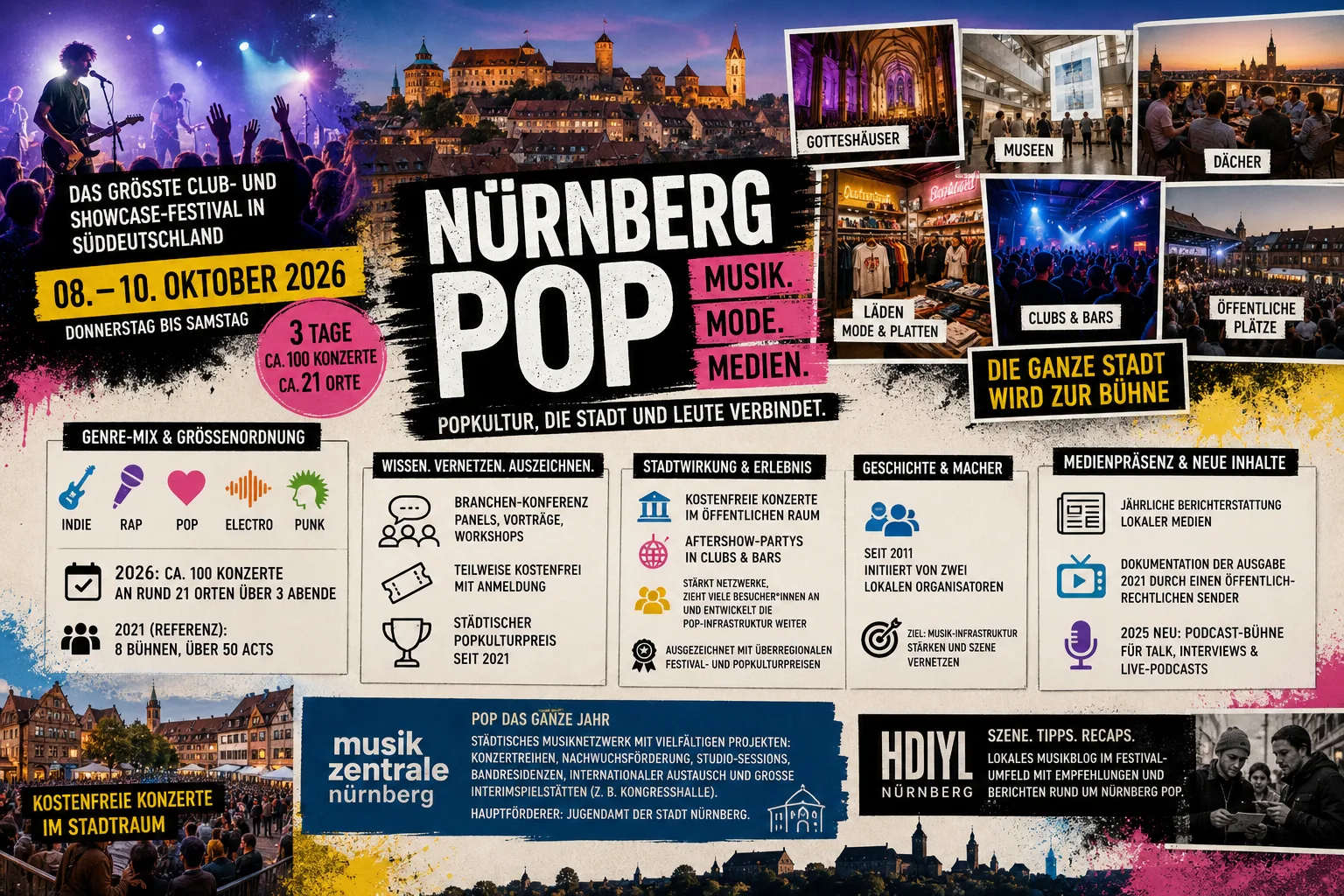
When shop windows turn into mini-stages, cultural venues are used late into the night, and the old town feels like a curated playlist, Nuremberg shows how urban pop culture can work today: as an interplay of live music, style, media formats, and city life.
Old Town as a Stage: Venues, Cityscape, and Fashion
In Nuremberg, pop culture becomes especially tangible when it doesn't just take place on classic club stages. For October 2026, it can again be expected that a wide variety of spaces will become venues—including clubs, cultural centers, and selected places that are not primarily perceived as concert locations.
Why the Cityscape is Part of the Staging
Moving between locations makes the routes themselves an experience: alleys, squares, and courtyards become transitions between sound spaces. At the same time, a visible style mix emerges, strongly communicated through fashion: streetwear, vintage, DIY accessories, and consciously curated looks are part of the typical festival image in the city center.
Pop Culture Meets Commerce and Everyday Life
When shops, temporary pop-up spaces, or unusual venues are integrated into the program, a direct connection to the local creative and retail landscape is created. For visitors, this means: music is not just consumed, but experienced spatially—close, low-threshold, and often surprising.
Conference & Media: Knowledge Transfer and Publicity
Pop culture is not just a stage, but also a discussion: the festival environment typically includes a professional and exchange track with panels, talks, or workshops. Such formats are especially relevant for everyone active in music, media, cultural work, or the creative industries—and for those interested in understanding how booking, funding, digital distribution, or fair working conditions are negotiated in practice.
Topics Particularly Relevant for 2026
- Support for Young Talent and Visibility: How newcomers get slots, reach, and fair conditions.
- Club and Live Ecosystem: From noise protection to safety concepts to the role of interim uses.
- Media Change: How podcasts, short videos, and community platforms are changing music journalism and promotion.
- Diversity & Access: Line-up policy, breaking down barriers, and respectful event standards.
Such a weekend is usually accompanied by local and regional media coverage—with program tips, interviews, photo series, and follow-up reports. For 2026, it is worth keeping an eye out for official press and social updates early on to catch any last-minute program changes.
City Impact: Networks, Economy, Lifestyle
For October 2026, it is foreseeable that a festival spread widely throughout the city center will have an impact not only culturally, but also spatially: visitor flows move between venues, gastronomy and recreational areas benefit, and the city center is experienced more on foot for a weekend.
What Visitors Typically Take Away
- New Places: Locations that are rarely visited without a reason become part of one's own city map.
- New Music: Showcase formats encourage discoveries, not just “headliner moments.”
- New Contacts: Queues, routes between venues, and aftershow formats are social hubs.
In the long term, such a festival can have a sustainable effect above all if it meets an active network of initiatives, venues, funding structures, and media ecosystems. This very interplay determines whether pop culture remains visible as a lasting urban practice—beyond individual dates.
Practical Planning for October 2026
1) Program & Tickets
Since showcase festivals often have several concerts running in parallel, it makes sense to mark favorites early and plan alternatives nearby. The program schedule, admission rules, and ticket models as published on the official sites are decisive.
2) Routes & Timing
If you want to use the old town as a “route festival,” plan realistic changeover times. Especially in small venues, it can be wise to arrive early for a set or switch to a later slot.
3) Respectful Festival Culture
Simple standards help ensure a good weekend: consideration in queues, respectful behavior in crowded spaces, as well as observing photo/video rules and awareness notices from the organizers.