
Arnd Henze
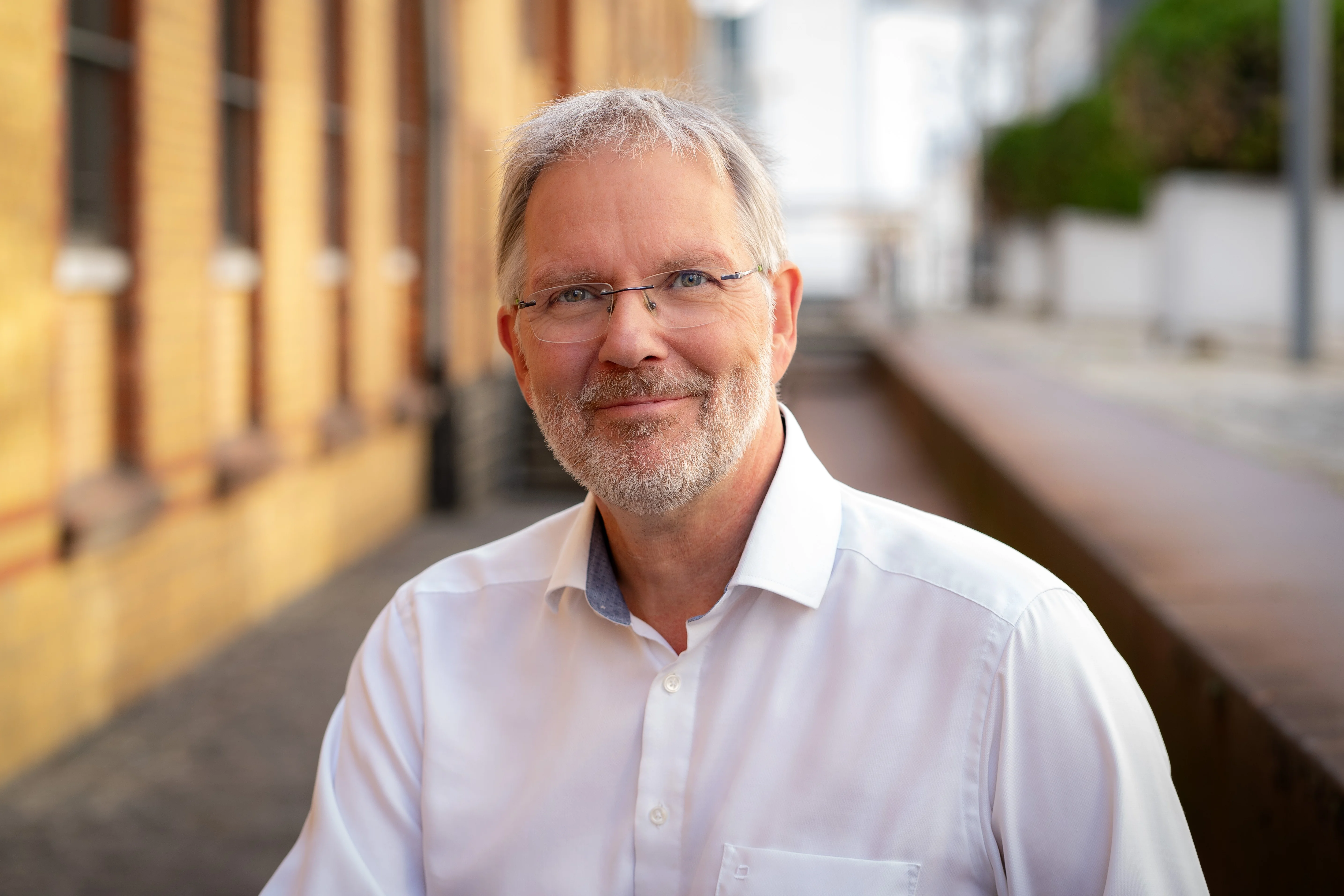
Image from Wikipedia
Image from Wikipedia
Arnd Henze: The Investigative Journalist Who Sets Faith, Politics, and Democracy in Motion
A German Publicist at the Intersection of Research, Public Debate, and Social Responsibility
Arnd Henze, born on September 25, 1961, in Einbeck, is one of the defining voices in German journalism, particularly in the realms of political analysis, ecclesiastical contemporary history, and democratic issues. Growing up in Einbeck, Göttingen, and Garbsen, he began working for the local newspaper Rundblick and with the Norddeutscher Rundfunk while still in school. Early on, he combined journalistic curiosity with a keen sense for societal conflicts and media impact. ([de.wikipedia.org](https://de.wikipedia.org/wiki/Arnd_Henze))
Early Years: Journalistic Curiosity as a Way of Life
The biography of Arnd Henze reads like the journey of a journalist who never settles for the surface. Even at a young age, he gained experience in local journalism and broadcasting, where he notably hosted the youth program "Der Club." These early stages shaped his style: vivid, precise, open to discussion, and always close to the people he reports on. ([de.wikipedia.org](https://de.wikipedia.org/wiki/Arnd_Henze))
His studies in Protestant theology in Göttingen, Heidelberg, and at the Graduate Theological Union in Berkeley endowed his work with a rare depth. Henze combined theological education with journalistic practice, developing a profile that links socio-political analysis, ecclesiastical responsibility, and international perspectives. This intellectual duality has defined his entire career. ([de.wikipedia.org](https://de.wikipedia.org/wiki/Arnd_Henze))
Career at WDR and in ARD: Long-Range Research
After completing his traineeship and a brief period as a freelance writer, Arnd Henze became a foreign affairs editor and reporter at WDR in 1992. He regularly reported from the USA for Tagesschau, Tagesthemen, and ARD-Weltspiegel. During this phase, he produced a comprehensive body of social reports and documentaries that solidified his reputation as a precise observer of international developments. ([de.wikipedia.org](https://de.wikipedia.org/wiki/Arnd_Henze))
He gained particular attention in the late 1980s due to investigative work on the involvement of the Protestant Church in the Nazi era. His research on the role of August Marahrens and the Eisenach "De-Judaization Institute" sparked broader debates and early on demonstrated how consistently Henze thinks about historical responsibility, ecclesiastical institutions, and political morality together. This is not journalism for quick impact, but one of long-term enlightenment. ([de.wikipedia.org](https://de.wikipedia.org/wiki/Arnd_Henze))
Berlin, Cologne, and the Wide Public Sphere
From 2012 to 2019, Henze worked as a television correspondent in the ARD capital studio with a focus on foreign and security policy. Since 2019, he has returned to Cologne, engaging in investigative research and WDR Doku. This places him at the intersections of politics, media, and public perception, where journalistic work significantly influences societal debates. ([de.wikipedia.org](https://de.wikipedia.org/wiki/Arnd_Henze))
In October 2020, the documentary "I Don't Even Know How He Died - How a Nursing Home Became a Coronavirus Trap," for which Henze was jointly awarded with Sonja Kättner-Neumann, received significant acclaim. The production exemplifies his ability to translate complex realities into accessible yet not oversimplified television formats. Particularly in times of crisis, his authority as a researcher and storyteller is evident here. ([de.wikipedia.org](https://de.wikipedia.org/wiki/Arnd_Henze))
Publications and Books: Democracy, Church, and History
Arnd Henze is not only a reporter but also a publicist and author. In 2019, his book "Can the Church Do Democracy? We Protestants in a Stress Test" was published, exploring the anti-democratic traditions of Protestantism and current authoritarian temptations. Additionally, "With God Against Democracy. Why Christian Nationalism Concerns Us All" is scheduled for 2026. These titles mark a clear thematic core: Henze examines how religious narratives influence political power relations. ([de.wikipedia.org](https://de.wikipedia.org/wiki/Arnd_Henze))
His writings and lectures revolve around war and peace, climate protection, democracy, and anti-Semitism. He also contributes on topics of media power, common good, and the role of churches in the self-description of the present. Henze thus tackles a long-term journalistic question: How does a democratic public remain resilient against historical amnesia and ideological rigidity? ([de.wikipedia.org](https://de.wikipedia.org/wiki/Arnd_Henze))
Discography, Hits, and Music Press: Contextualization of the Material
In the available source material on Arnd Henze, there is no musical discography, chart history, or hit singles since he is active as a journalist and publicist, not as a musician. Accordingly, there are no verifiable details regarding albums, music awards, or music press-related critiques. For an authoritative artist page, this means: No fabricated genre classifications, no constructed releases, but a clear contextualization of his actual journalistic career. ([de.wikipedia.org](https://de.wikipedia.org/wiki/Arnd_Henze))
It is this clarity that reinforces the credibility of the page. The term "discography" can only be understood here in a figurative sense: as an overview of works from documentaries, books, lectures, and debate contributions. His documentary works include "Green Revolution in Iowa," "Saddam's Game with Fire," "Mississippi Blues – The Garbage Workers of Memphis," and the later Corona documentary from 2020. ([de.wikipedia.org](https://de.wikipedia.org/wiki/Arnd_Henze))
Public Impact and Cultural Influence
Henze's influence lies in the connection of research, historical responsibility, and political judgment. From 1993 to 2012, he was the head of the "Dellbrücker Forum," which developed into a nationally recognized venue for societal debates through 111 podium events. This is complemented by his moderation of events, including at the Protestant Church Day 2015 with more than 11,000 participants alongside Kofi Annan and Frank-Walter Steinmeier. ([de.wikipedia.org](https://de.wikipedia.org/wiki/Arnd_Henze))
His lecture tours to the USA, such as on the topic "Weaponizing Bonhoeffer," also demonstrate the international reach of his subjects. Henze discusses the threats to democracy, ecclesiastical contemporary history, and the political appropriation of religious figures. Thus, his cultural influence arises not from popular music or celebrity status, but from public relevance, analytical sharpness, and a clear ethical compass. ([de.wikipedia.org](https://de.wikipedia.org/wiki/Arnd_Henze))
Awards and Recognition
The list of his awards underscores the resonance of his work: in 2003, Henze received the Marler Television Award for Human Rights, in 2018 the Concordia Prize for Press and Information Freedom, and in 2021 multiple awards, including the Media Prize of the German Society for Internal Medicine, the Publicity Prize of the Health Foundation, and the Andere-Zeiten Journalism Prize. In 2022, he received the Media Prize Economy NRW. These awards represent journalistic reliability, relevance, and societal impact. ([de.wikipedia.org](https://de.wikipedia.org/wiki/Arnd_Henze))
Conclusion: Why Arnd Henze Remains Compelling
Arnd Henze is compelling because he understands journalism as a democratic practice. His career connects local beginnings, international research, ecclesiastical contemporary history, and political analysis into a dense journalistic profile. Those who follow his work experience precise research, a clear stance, and an unusual thematic breadth that spans from television to books. ([de.wikipedia.org](https://de.wikipedia.org/wiki/Arnd_Henze))
Particularly in a time where public debates often become fast-paced and loud, Henze emphasizes substance, historical depth, and argumentative precision. This makes him a relevant voice for everyone who wants to understand political contexts. Those who encounter him at lectures, discussions, or public events meet an observer of the present who not only explains but also stimulates further thought. ([de.wikipedia.org](https://de.wikipedia.org/wiki/Arnd_Henze))
Official Channels of Arnd Henze:
- Instagram: no official profile found
- Facebook: no official profile found
- YouTube: no official profile found
- Spotify: no official profile found
- TikTok: no official profile found
Sources:
Upcoming Events
With God Against Democracy - Lecture and Discussion with Arnd Henze