
Harald Kimmig
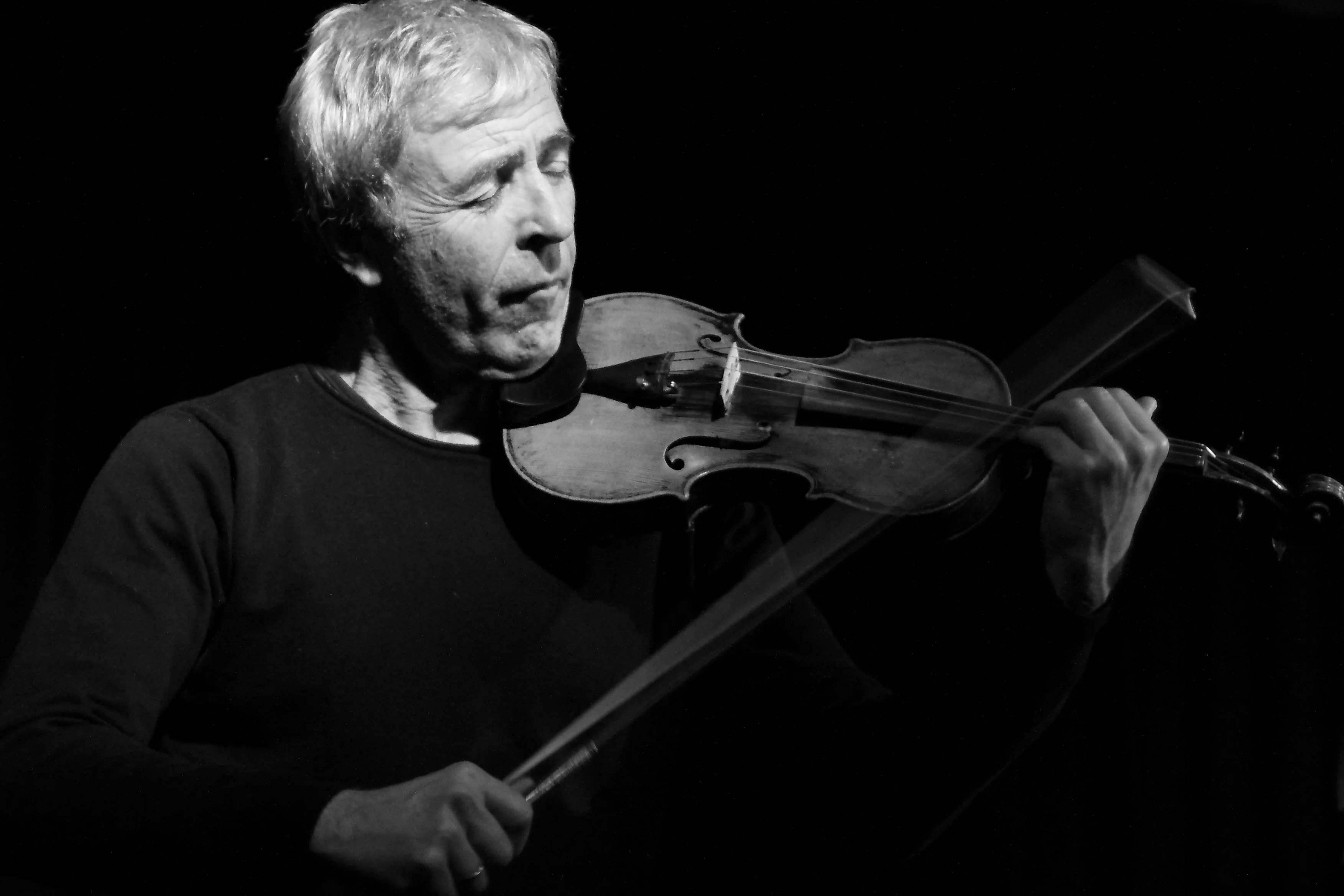
Image from Wikipedia
Image from Wikipedia
Harald Kimmig – The Sound Researcher on the Violin between Improvisation, Performance, and Composition
A German exceptional musician who makes the unknown his artistic principle
Harald Kimmig, born on October 9, 1956, in Offenburg, is one of the most distinctive voices in free improvisational music in Germany. As a violinist, composer, and performer, he combines instrumental virtuosity with an open, experimental approach to sound, space, and movement. His artistic profile emerges from a rare blend of musical radicalism, interdisciplinary thinking, and consistent independence. ([de.wikipedia.org](https://de.wikipedia.org/wiki/Harald_Kimmig))
From an early age, the violin was at the center: From 1966 to 1974, Kimmig took violin lessons, later studying philosophy, sociology, and art history from 1975 to 1982. This academic breadth continues to shape his music career today, as it enriches his improvisation practice with aesthetic reflection and cultural-historical depth. Since 1984, he has worked as a professional musician and developed a distinctive style that sits between sound research, ensemble interaction, and performative presence. ([de.wikipedia.org](https://de.wikipedia.org/wiki/Harald_Kimmig))
Biography and Artistic Influence
Kimmig's path to free improvisation did not follow a conventional jazz route but rather through a consciously expanded understanding of music. Lessons with Leszek Zadlo, Muneer Abdul Fataah, John Tchicai, and Cecil Taylor opened him up to various aesthetic approaches, ranging from improvisational freedom to compositional rigor. Especially the influence of Cecil Taylor points to an attitude where musical energy, awareness of form, and risk interplay. ([de.wikipedia.org](https://de.wikipedia.org/wiki/Harald_Kimmig))
His official self-understanding on the website also clearly reflects this attitude: Kimmig describes himself as an improvising musician and performer who explores sounds and artistic forms in interdisciplinary interactions. He combines sounds from the instrument with conventional violin playing and has developed over the years a unique sound that is both expressive and structured. It is precisely this combination of technique, instinct, and the will to form that makes his artistic development so compelling. ([haraldkimmig.de](https://www.haraldkimmig.de/))
Entrance into the Professional Improvisation Scene
His professional career began in 1984 with solo concerts and as a member of the First Improvising String Orchestra. This step marked his entry into a scene where spontaneous composition, collective reaction, and sound expansion are central. Kimmig positioned the violin not as a traditionally bound salon instrument but as an elastic medium for expressive sound language. ([de.wikipedia.org](https://de.wikipedia.org/wiki/Harald_Kimmig))
His openness to dialogical configurations became evident early on. The trio with Georg Wolf and Lukas Lindenmaier, documented on the CD rif-rif from 1990, is exemplary of his work in concentrated, chamber-music-like sharp improvisation formats. At the same time, he became co-leader of the F-Orkestra, which worked with musical personalities such as Buddy Collette and Peter Kowald, thereby bridging European improvisation and international avant-garde. ([de.wikipedia.org](https://de.wikipedia.org/wiki/Harald_Kimmig))
International Collaborations and Maturation of Style
Kimmig's discography and project history read like a map of free music. He played in Cecil Taylor's ensemble on the CDs Legba Crossing and Corona, participated in projects by John Tchicai and Vladimir Chekushin, and collaborated with Doug Hammond, Lee Konitz, Tony Oxley, Gabriele Hasler, Sirone, and Jürgen Wuchner. These collaborations document not only his range but also his stylistic flexibility and aesthetic sovereignty. ([de.wikipedia.org](https://de.wikipedia.org/wiki/Harald_Kimmig))
Even in more recent constellations, this openness remains central. Kimmig works in a trio with Carl Ludwig Hübsch and Lê Quan Ninh, is a member of the ensembles of Angelika Sheridan, Géraldine Keller, and Hideto Heshiki, and currently performs solo as well as in trio, duo, and performance formats. His artistic presence is nourished by a widely branched network between improvisation, dance, electronics, and composition. ([de.wikipedia.org](https://de.wikipedia.org/wiki/Harald_Kimmig))
Composition, Oratorio, and Larger Forms
Harald Kimmig is not only an improviser but also a composer with a keen sense of form. Together with Norbert Rodenkirchen, he composed the Aura Christinae in 2004, which has been performed multiple times in Stommeln, exploring the tension between early music resonance, contemporary tonal language, and performative presentation. Such works show that Kimmig does not play improvisation against composition but productively interconnects both levels. ([de.wikipedia.org](https://de.wikipedia.org/wiki/Harald_Kimmig))
Additionally, he has composed string quartets, larger orchestral works, and the oratorio Der Lauf des Lichtes und der Dunkelheit from 1999, as well as film music. With this, Kimmig clearly expands his scope beyond spontaneous ensemble playing and positions himself as a composer who takes sound dramaturgy, spatial effects, and narrative development seriously. His work demonstrates the rare connection between improvisational freedom and compositional discipline. ([de.wikipedia.org](https://de.wikipedia.org/wiki/Harald_Kimmig))
Current Projects and Releases
Current formations by Kimmig include the violin solo, the trio Kimmig-Studer-Zimmerlin, the trio KHW with Sascha Henkel and Christian Weber, as well as duos with eriKm, Sascha Henkel, Lilo Stahl, Emilio Guim, and Ephraim Wegner. His official website reveals a work field that continuously oscillates between acoustic density, electrification, and intermedial performance. The music remains open, explorative, and present. ([haraldkimmig.de](https://www.haraldkimmig.de/))
Particularly noteworthy is the 2024 album Black Forest Diary by the Kimmig-Studer-Zimmerlin Electric Trio. The specialized press described the recording as an electrically enhanced improvisation project, emphasizing the tension between the matured trio sound and the new sonic intensity. The album thus exemplifies a late yet by no means age-averse intensification of his language: electric, detailed, rough, and precise. ([haraldkimmig.de](https://www.haraldkimmig.de/publikationen/))
Discography and Critical Reception
The selection on Kimmig's official publication page documents a coherent, demanding discography. Notable releases include Harald Kimmig Violin Solo: Im Freien (1998), Cecil Taylor's Looking Corona (1991), erzählend nah (2012), RAW with Kimmig-Studer-Zimmerlin feat. John Butcher (2016), Im Hellen (2017), Harald Kimmig Violin Solo: One body One bow One string (2018), Zweige (2018), Kimmig-Studer-Zimmerlin and George Lewis (2019), and Black Forest Diary (2024). This selection shows a consistent development within free and extended improvisation music. ([haraldkimmig.de](https://www.haraldkimmig.de/publikationen/))
The reception repeatedly categorizes Kimmig as a deeply embedded musician of the experimental scene. Critics highlight his ability to set acoustic and electronic means in tension without losing focus on musical communication. His involvement in projects with George Lewis and his longstanding work in the trio Kimmig-Studer-Zimmerlin underscore his rank as a specialist for dense, form-conscious improvisation with high sonic independence. ([jazzjournal.co.uk](https://jazzjournal.co.uk/2024/07/30/kimmig-studer-zimmerlin-black-forest-diary/?utm_source=openai))
Style, Stage Presence, and Cultural Influence
Kimmig's style thrives on the balance of noise, tone, and movement. The website describes how he virtuously combines instrumental sounds with conventional violin playing and also links his performances with dance and movement sequences. This creates a stage presence that is not only musical but also physical and visual, placing improvised music in the realm of a total art form. ([haraldkimmig.de](https://www.haraldkimmig.de/))
Culturally, this work is significant as well. Kimmig explores in his multimedia formats the interactions of the arts and their influence on the human self and on encounters with the foreign and the familiar. This makes him an artist whose relevance extends far beyond a narrow genre attribution: He represents a music that interconnects thinking, listening, movement, and social perception. ([haraldkimmig.de](https://www.haraldkimmig.de/))
Awards and Recognition
Among the official honors is the Dance and Theatre Award of the state of Baden-Württemberg and the city of Stuttgart from 2019 for the performance Interface. This award confirms Kimmig's position not only as a musician but also as an interdisciplinary performance artist whose works reach into dance and theater contexts. The award marks a point where his experimental practice receives institutional recognition without losing its uniqueness. ([haraldkimmig.de](https://www.haraldkimmig.de/))
Conclusion: An Artist for Open Ears and Awake Senses
Harald Kimmig is a musician who brings the violin out of the shadow of tradition and transforms it into a laboratory for improvisation, composition, and performance. His career connects the international free scene with a deep personal signature that is convincing both in ensemble work and in solo format. Those who experience music as a living, risky, and intellectually stimulating art find in Kimmig one of the most exciting German representatives in this field. ([haraldkimmig.de](https://www.haraldkimmig.de/))
This energy unfolds especially live: in immediate reaction, physical engagement with sound, and openness to the unpredictable. Harald Kimmig remains an artist who should not only be heard but experienced. His work on stage demonstrates how intensely free improvisational music can resonate in the here and now. ([haraldkimmig.de](https://www.haraldkimmig.de/))
Official Channels of Harald Kimmig:
- Instagram: No official profile found
- Facebook: No official profile found
- YouTube: No official profile found
- Spotify: No official profile found
- TikTok: No official profile found
Sources:
- Harald Kimmig - Official Website
- Harald Kimmig - Publications
- Harald Kimmig - Music / Projects
- Wikipedia - Harald Kimmig
- Jazz Journal - Kimmig, Studer, Zimmerlin: Black Forest Diary
- The Free Jazz Collective - Black Forest Diary
- Vital Weekly - KSZ Electric Trio - Black Forest Diary
- Jazzword - Kimmig-Studer-Zimmerlin Electric Trio
Upcoming Events
Harald Kimmig: The Art of the Now - The Improvisation