
John Woo
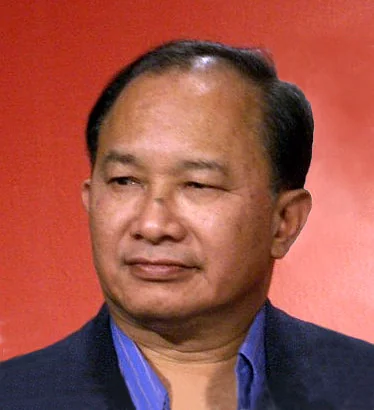
Image from Wikipedia
Image from Wikipedia
John Woo – The Architect of Defining Hong Kong Action Cinema
A Director Who Transformed Violence into Choreography and Emotion
John Woo, born in 1946 in Guangzhou and raised in Hong Kong, is one of the most influential film directors in Hong Kong cinema and one of those authors of action films whose style is instantly recognizable. His work combines spectacular staging, melodramatic tension, and a fine sense of moral conflict. Woo rose to fame through films in which friendship, loyalty, betrayal, and sacrifice are interwoven with a visually powerful, often heightened aesthetic. ([de.wikipedia.org](https://de.wikipedia.org/wiki/John_Woo?utm_source=openai))
Early Years: From Guangzhou to Hong Kong
Woo's biography is closely linked to the upheavals of Chinese history. His family fled from communism to Hong Kong in 1951 and initially lived under difficult conditions in Shek Kip Mei, a then-slum area. This background of material insecurity and social constriction influenced the later cinema of the director, where outsiders, losers, and morally torn heroes consistently come to the forefront. ([de.wikipedia.org](https://de.wikipedia.org/wiki/John_Woo?utm_source=openai))
Before directing himself, Woo learned the craft from the ground up. He worked at film studios, wrote screenplays, and began in 1971 as an assistant director to Chang Cheh, one of the defining names in Hong Kong cinema. These formative years laid the foundation for a career in which Woo not only mastered genre cinema but later also redefined it stylistically. ([filmstarts.de](https://www.filmstarts.de/personen/16176/biografie/?utm_source=openai))
The Breakthrough: From Craft to Signature
Woo made his feature film debut in 1973 with The Young Dragons. However, the decisive artistic breakthrough came in the 1980s, when he elevated the Hong Kong action film to a new emotional and visual level with A Better Tomorrow. The film became a box office success and made Chow Yun-Fat a star overnight. With this, Woo found that mix of pathos, pace, and stylized violence that would define his work from then on. ([filmstarts.de](https://www.filmstarts.de/personen/16176/biografie/?utm_source=openai))
In the following years, Woo further honed his signature style with films such as A Better Tomorrow II, The Killer, Bullet in the Head, and Hard Boiled. These works are considered cornerstones of Heroic-Bloodshed cinema: characters who are consumed by loyalty, extreme conflicts between friendship and duty, and a visual language where action becomes choreography. The famous slow-motion shots, doves, double guns, and the ballet of movement and destruction became hallmarks of an entire era. ([de.wikipedia.org](https://de.wikipedia.org/wiki/John_Woo?utm_source=openai))
Hollywood and International Influence
In the early 1990s, Woo transitioned to Hollywood and introduced his aesthetic into the American mainstream. With Hard Target, Broken Arrow, and especially Face/Off, he was also recognized internationally as a master of stylized action cinema. His films combined star-driven narratives with an intensity that had a lasting impact on American action cinema. ([allocine.fr](https://www.allocine.fr/personne/fichepersonne-16176/biographie/?utm_source=openai))
Especially Face/Off is still regarded today as an example of Woo’s ability to transform a pulpy concept into an operatic format. In retrospect, his work has frequently been cited as a reference point for later action directors whose films also focus on extreme corporeality, expressive image composition, and emotional intensity. Woo thus became not just a director of Hong Kong cinema, but a global style brand. ([lemonde.fr](https://www.lemonde.fr/culture/article/2024/04/03/au-forum-des-images-a-paris-un-retour-sur-le-bouillonnement-du-cinema-de-hongkong_6225764_3246.html?utm_source=openai))
The Musicality of Images: Rhythm, Composition, Choreography
A central characteristic of Woo's cinema is rhythm. His action sequences function like precisely composed pieces, where movement, editing, sight lines, and acoustic accents are coordinated. The BFI recently noted that Woo uses musical theory for action sequences. This aptly describes how much his films rely on tempo, repetition, and escalation. ([bfi.org.uk](https://www.bfi.org.uk/interviews/john-woo-better-tomorrow-killer-hard-boiled?utm_source=openai))
This form of staging also explains why Woo's work is often considered more emotional than that of many other action filmmakers. Violence in his films never appears merely as effect but as expression of inner conflicts. In this tension between melodrama and hardboiled aesthetics lies the special quality of his filmography. ([de.wikipedia.org](https://de.wikipedia.org/wiki/John_Woo?utm_source=openai))
Return to Asia and Later Works
After several years in Hollywood, Woo returned to China and realized large-scale productions like Red Cliff and Manhunt. These films show that even in the later stages of his career, he prefers the grand historical or thriller settings. Even as his themes changed, the artistic core idea remained the same: characters in extreme situations, moral decisions under pressure, and a staging that never leaves the dramatic to chance. ([moviepilot.de](https://www.moviepilot.de/people/john-woo/news?utm_source=openai))
In 2023, Woo returned to Hollywood with Silent Night. Following that, in 2024 came The Killer, a remake of his own classic from 1989, relocating the plot to modern-day Paris and reorienting the focus. In interviews, Woo has also spoken about further projects, including a long-discussed remake of The Killer and future developments of new endeavors. Reports of more new film ideas circulated for 2025, indicating that Woo remains artistically active even in advanced age. ([rogerebert.com](https://www.rogerebert.com/interviews/john-woo-interview?utm_source=openai))
Cultural Influence and Critical Reception
John Woo is still regarded today as one of the central renewers of action cinema. International film critics and film history locate his significance primarily in the combination of genre craftsmanship and stylistic radicalism. In Hong Kong, he made action cinema more poetic; in Hollywood, he introduced a new form of physical expressiveness and emotional elevation. ([de.wikipedia.org](https://de.wikipedia.org/wiki/John_Woo?utm_source=openai))
His films are also often described as turning points: A Better Tomorrow as a key film of the Hong Kong cinema era, The Killer as a style-defining masterpiece, and Hard Boiled as the triumphant peak of his Hong Kong phase. The fact that critics and retrospectives continually revisit these titles demonstrates the lasting impact of his oeuvre. ([filmstarts.de](https://www.filmstarts.de/personen/16176/biografie/?utm_source=openai))
Current Projects and Releases
Woo's recent works include Silent Night and The Killer (2024). Additionally, there have been reports of further planned projects, including a new endeavor with Nicolas Cage and an unusual semi-musical project involving the Sparks Brothers. This mix of returning to his own material and a willingness to experiment illustrates that Woo does not view his career as a completed chapter, but as an ongoing artistic development. ([rogerebert.com](https://www.rogerebert.com/interviews/john-woo-interview?utm_source=openai))
Conclusion: Why John Woo Continues to Fascinate
John Woo remains intriguing because he never regarded action as mere movement but as emotional drama in extreme form. His films combine genre mastery, visual impact, and a distinct humanistic foundation. Anyone wishing to understand how defining Hong Kong cinema was for world cinema cannot overlook Woo. His work belongs on the big screen, where his imagery, his stage presence as a director, and his uncompromising artistic development can unleash their full power. ([de.wikipedia.org](https://de.wikipedia.org/wiki/John_Woo?utm_source=openai))
Official Channels of John Woo:
- Instagram: No official profile found
- Facebook: No official profile found
- YouTube: No official profile found
- Spotify: No official profile found
- TikTok: No official profile found