Gewerbegebiet Glocke, Ludwig-Thoma-Straße 36b, Bayreuth
Ludwig-Thoma-Straße 36b, 95447 Bayreuth, Germany
FabLab-Bayreuth | Opening Hours & Children's Birthday
The FabLab-Bayreuth is much more than a room with machines: The open high-tech workshop in Bayreuth combines learning, prototyping, creativity, and practical work on technologies that are often only accessible in training, industry, or specialized workshops. The non-profit association was founded on March 2, 2013, and the opening ceremony took place on July 20, 2013. The website describes the FabLab as a non-commercial, open high-tech workshop with the goal of providing low-threshold access to modern production technologies and production knowledge. Today, the location is presented as a vibrant workshop for children, teenagers, adults, teams, clubs, startups, and curious beginners. The homepage also mentions an area of around 700 square meters for the further expansion of STEM offerings. This is an important indication that not only individual machines are present, but a growing learning and production environment has emerged that has firmly established itself in Bayreuth. ([fablab-bayreuth.de](https://www.fablab-bayreuth.de/wir-ueber-uns/verein))
Opening Hours, Address, and Directions to FabLab-Bayreuth
Anyone wishing to visit FabLab-Bayreuth should always check the current times first, as the website explicitly recommends checking the daily opening hours in the calendar. At the same time, the page provides a clear framework: regular operation is currently possible on Mondays, Tuesdays, Thursdays, and Fridays from 9:00 AM to 4:30 PM, Wednesdays from 10:00 AM to 7:00 PM, and Saturdays from 4:00 PM to 8:00 PM. For many inquiries regarding opening hours, this is the most important practical entry point, as the workshop does not function like a classic museum or a permanent exhibition, but rather as a lively workplace with fixed yet dynamic times. The laboratory address is Ludwig-Thoma-Straße 36 b in 95447 Bayreuth. FabLab can be reached by phone at 0921 79308650, and by email at info@fablab-bayreuth.de. Those arriving by car, bike, on foot, by train, or by bus will find a route planner for all common ways on the directions page. The public transport connections are specifically described: Bus lines 314 and 323 to Ludwig-Thoma-Brücke are mentioned. This makes the location easily accessible for visitors from Bayreuth and the surrounding area, especially when planning a workshop, a children's birthday, or an OpenLab appointment. Because the place is designed for participation, the journey is not a minor detail but part of the visitor orientation. The contact page and the imprint also confirm the official association structure of the FabLab as FabLab-Bayreuth e. V. based in Bayreuth, so here you have not only a workshop but a clearly organized institution with reliable contact paths. ([fablab-bayreuth.de](https://fablab-bayreuth.de/))
Children's Birthday and Tech4Kids in the High-Tech Workshop
A particularly in-demand topic is the children's birthday at FabLab-Bayreuth, and the official page clearly shows why: Instead of a classic afternoon with a standard program, there is a birthday experience with technology, creativity, and a visible result to take home. The offer is aimed at children aged 9 and above and is based on the motto that the children not only celebrate but also create themselves. The children's birthday page offers themes such as T-shirt design, 3D printing, and laser cutting. The description emphasizes that a combination of a decorated birthday table and creative technology ensures a varied and stress-free birthday. This is interesting for parents looking for a special celebration where children can be active and work under guidance at the same time. Additionally, the website shows that there are age-appropriate formats in the Tech4Kids area and other children's courses. For example, the children's birthday page and workshop offerings also mention sewing machine courses for children aged 8 to 12. Other technology projects are designed for older children aged 12 and above, such as building a dog table lamp or specific laser cutter and 3D printing projects. This makes it clear that FabLab-Bayreuth not only offers one-time events but has developed a whole learning chain for young visitors. The children experience not abstract theory but concrete steps like designing, cutting, printing, assembling, and experimenting. This connection between experience and knowledge makes the interest in children's birthdays, Tech4Kids, and creative STEM offerings so understandable. The workshop thus appeals to families looking for a special celebration, but also to parents who want to provide their children with a first serious technology experience. ([fablab-bayreuth.de](https://www.fablab-bayreuth.de/workshop/kindergeburtstag))
Machine Park: 3D Printing, Laser Cutter, CNC, and Textile Design
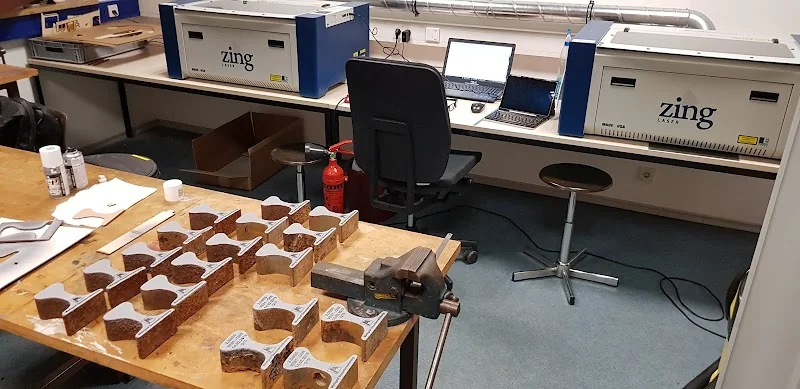
The heart of FabLab-Bayreuth is the machine park, and here it is most evident why the workshop is often associated with 3D printing, laser cutting, and CNC milling in search queries. The website lists several 3D printing systems, including Ultimaker 2+, Ultimaker 2+ extended, Ultimaker 3, Makerbot Replicator 2, Makerbot Replicator 2x, Deegreen by Ysoft, and Formlabs 2 SLA. This is relevant for visitors because not only one type of printer is available, but various methods can be used depending on the requirements. Those needing robust functional prototypes, quick model ideas, or detailed surfaces will find different technical options. This is supplemented by notes on material types, print volume, resolution, and in one case even open-source software like Cura. The workshop page thus explains not only that 3D printing is available but also how broad the practical range actually is. In addition to additive manufacturing, subtractive and precise cutting also plays an important role. The laser cutter ZING6030 is described with a working area of 609 x 304 x 197 mm and a laser power of 40 watts. The homepage also explains that with the laser cutter, various materials such as wood, acrylic glass, MDF, natural materials, or cardboard can be engraved or cut with digital templates to an accuracy of 0.1 mm. This is important not only for prototypes but also for signs, decorations, model making, and personalized objects. The workshop also has a portal milling machine with a working space of 117.5 x 69 x 18 cm, which is particularly suitable for wood, plastics, and aluminum. Additionally, there is a Brother VR embroidery machine with a 200 x 200 mm embroidery area and up to 1000 stitches per minute, cutting plotters like the expert24 and the Summa D120, as well as a heat press for textile design. This mix shows that FabLab-Bayreuth cannot be reduced to a single technology but brings together various manufacturing and design methods. ([fablab-bayreuth.de](https://fablab-bayreuth.de/die-werkstatt))
Particularly exciting is the way the workshop connects different target groups. The homepage describes the FabLab as a place for startups and innovative product ideas, while the workshop page also addresses creative students, professionals, and the curious. This is more than just marketing: The technical equipment is indeed set up so that both first experiments and more demanding implementations are possible. In the electronics workshop, soldering stations, measuring devices, and semiconductor technology are available, so microcontroller projects with Arduino or similar platforms are also possible. This connects mechanical manufacturing with electronic development and makes the FabLab a true maker place in the broader sense. The cutting plotter is suitable for paper, vinyl, and similar materials, the embroidery machine for textile motifs, and the laser cutter for precise engravings and cuts. This creates interfaces between design, craftsmanship, digitalization, and education. Even for those looking for photos or a logo, this technical diversity is relevant, as the website itself works with many image motifs and presents the machine park vividly. The crucial point remains the same: FabLab-Bayreuth focuses on visible, tangible results. Those who design something can bring it into a real form here. Those who only have an idea receive tools, knowledge, and guidance to turn it into an object. This combination of machines, competence, and an open learning culture makes the workshop so attractive for prototyping, hobbies, education, and creative practice. ([fablab-bayreuth.de](https://fablab-bayreuth.de/die-werkstatt))
OpenLab, OperatorLab, and Using the Workshop
A central point for everyone who wants to not only visit FabLab-Bayreuth but also actively use it is the rules surrounding OpenLab, OperatorLab, and introductory courses. The FAQ page clearly explains that the machine park can generally be used by anyone after attending an introductory workshop for the respective machine. Professional qualifications do not play a role here. This is important because it practically implements the idea of the FabLab as an open learning place: First, guided learning takes place, then independent work. The OpenLab sessions currently take place on Wednesdays from 5:00 PM to 9:00 PM and Saturdays from 4:00 PM to 9:00 PM. During these times, the FabLab is open to everyone, and visitors who have already completed a workshop can work on the corresponding machines. Additionally, there is an OperatorLab session once a week, specifically on Thursdays starting at 5:00 PM. During this time, the workshop is only open for lab operators. The website also explains the tasks an operator takes on: opening and closing the lab, being a contact person for problems, distributing materials, operating the cash register, and guiding new visitors. Those who want to become an operator should have attended at least one machine course; regular visits to the FabLab are also advisable to get to know the processes. This shows that behind the open times, there is a responsible organizational system and that participation is not only allowed but explicitly desired. At the same time, the page makes the cost structure transparent: The use of the machine park is generally free, with exceptions for CNC milling machines and laser cutters. There, machine time costs are charged by the minute. Material costs are additionally incurred according to the price list. For many visitors, this information is crucial because it makes the entry manageable and avoids misunderstandings. Even commercial use of individual exhibits is generally possible but must be coordinated with the FabLab in advance. This shows FabLab-Bayreuth as an open but clearly organized place where learning, experimenting, and responsible use go hand in hand. ([fablab-bayreuth.de](https://fablab-bayreuth.de/faqs))
Association, History, and STEM Mission in Bayreuth
The history of FabLab-Bayreuth is closely linked to the ambition to make technology more accessible in the region. The non-profit sponsoring association was founded on March 2, 2013, with the aim of providing all people with open access to technological progress. The page describes the FabLab as a learning, experience, and working environment where space, standard machines, and information and communication technology come together with knowledge, creativity, and socio-culture. This description makes it understandable why the FabLab is so often perceived as an open high-tech workshop in Upper Franconia. The path there did not begin in a finished hall but with a concrete construction process: Free spaces were needed for the idea, and eventually, around 200 square meters were made available in the Bayreuth industrial area. The association started there with renovation work, digital infrastructure, and the gradual establishment of the lab. Finally, on July 20, 2013, the opening ceremony was celebrated. This chronological development is important because it shows that the FabLab did not arise by chance but from association work, commitment, and regional support. The current website also mentions the association's registration number VR 200494 and makes it clear that the organization is not only ideologically but also formally anchored. Yomettin Soybaba is listed as the chairman, and Arnulf Daum as the deputy chairman. This makes FabLab-Bayreuth clearly visible as an association with responsibility, contacts, and a long-term structure. For visitors searching for FabLab Bayreuth e. V. or FabLab Bavaria, this organizational background is a good signal because it conveys trust and continuity. ([fablab-bayreuth.de](https://www.fablab-bayreuth.de/wir-ueber-uns/verein))
The current development also shows that FabLab-Bayreuth remains strongly involved in education, youth promotion, and regional cooperation. The homepage highlights the FabLab Factory Camp project as a MINT21 award winner for 2025. This cooperation project was developed together with the Alexander Humboldt Secondary School in Bayreuth; partners included Siemens Healthineers at the Kemnath location and Schlaeger Kunststofftechnik GmbH, and the project was funded by the Bavarian State Ministry for Economic Affairs, Regional Development, and Energy. In the camp, students worked with professionals to create a robotic arm, with the components being manufactured directly at the respective production sites of the companies. The kick-off and finale took place at FabLab-Bayreuth. This is a very good example of how the workshop extends beyond mere course work: It connects school, industry, and a practical learning place into a tangible STEM experience. The support from regional companies is also visible on the website. Previously, Schlaeger Kunststofftechnik GmbH provided premises, and now there is talk of collaboration with Schlenck GmbH. At the same time, the homepage refers to a further development of around 700 square meters. All of this shows a project that does not limit itself to individual courses but functions as a regional platform for technology, learning, and youth promotion. So, those who are not only looking for opening hours or photos but want to understand the significance of the place will find in FabLab-Bayreuth an association with a clear mission, a developed history, and current STEM relevance. ([fablab-bayreuth.de](https://fablab-bayreuth.de/))
Sources:
Show moreShow less
FabLab-Bayreuth | Opening Hours & Children's Birthday
The FabLab-Bayreuth is much more than a room with machines: The open high-tech workshop in Bayreuth combines learning, prototyping, creativity, and practical work on technologies that are often only accessible in training, industry, or specialized workshops. The non-profit association was founded on March 2, 2013, and the opening ceremony took place on July 20, 2013. The website describes the FabLab as a non-commercial, open high-tech workshop with the goal of providing low-threshold access to modern production technologies and production knowledge. Today, the location is presented as a vibrant workshop for children, teenagers, adults, teams, clubs, startups, and curious beginners. The homepage also mentions an area of around 700 square meters for the further expansion of STEM offerings. This is an important indication that not only individual machines are present, but a growing learning and production environment has emerged that has firmly established itself in Bayreuth. ([fablab-bayreuth.de](https://www.fablab-bayreuth.de/wir-ueber-uns/verein))
Opening Hours, Address, and Directions to FabLab-Bayreuth
Anyone wishing to visit FabLab-Bayreuth should always check the current times first, as the website explicitly recommends checking the daily opening hours in the calendar. At the same time, the page provides a clear framework: regular operation is currently possible on Mondays, Tuesdays, Thursdays, and Fridays from 9:00 AM to 4:30 PM, Wednesdays from 10:00 AM to 7:00 PM, and Saturdays from 4:00 PM to 8:00 PM. For many inquiries regarding opening hours, this is the most important practical entry point, as the workshop does not function like a classic museum or a permanent exhibition, but rather as a lively workplace with fixed yet dynamic times. The laboratory address is Ludwig-Thoma-Straße 36 b in 95447 Bayreuth. FabLab can be reached by phone at 0921 79308650, and by email at info@fablab-bayreuth.de. Those arriving by car, bike, on foot, by train, or by bus will find a route planner for all common ways on the directions page. The public transport connections are specifically described: Bus lines 314 and 323 to Ludwig-Thoma-Brücke are mentioned. This makes the location easily accessible for visitors from Bayreuth and the surrounding area, especially when planning a workshop, a children's birthday, or an OpenLab appointment. Because the place is designed for participation, the journey is not a minor detail but part of the visitor orientation. The contact page and the imprint also confirm the official association structure of the FabLab as FabLab-Bayreuth e. V. based in Bayreuth, so here you have not only a workshop but a clearly organized institution with reliable contact paths. ([fablab-bayreuth.de](https://fablab-bayreuth.de/))
Children's Birthday and Tech4Kids in the High-Tech Workshop
A particularly in-demand topic is the children's birthday at FabLab-Bayreuth, and the official page clearly shows why: Instead of a classic afternoon with a standard program, there is a birthday experience with technology, creativity, and a visible result to take home. The offer is aimed at children aged 9 and above and is based on the motto that the children not only celebrate but also create themselves. The children's birthday page offers themes such as T-shirt design, 3D printing, and laser cutting. The description emphasizes that a combination of a decorated birthday table and creative technology ensures a varied and stress-free birthday. This is interesting for parents looking for a special celebration where children can be active and work under guidance at the same time. Additionally, the website shows that there are age-appropriate formats in the Tech4Kids area and other children's courses. For example, the children's birthday page and workshop offerings also mention sewing machine courses for children aged 8 to 12. Other technology projects are designed for older children aged 12 and above, such as building a dog table lamp or specific laser cutter and 3D printing projects. This makes it clear that FabLab-Bayreuth not only offers one-time events but has developed a whole learning chain for young visitors. The children experience not abstract theory but concrete steps like designing, cutting, printing, assembling, and experimenting. This connection between experience and knowledge makes the interest in children's birthdays, Tech4Kids, and creative STEM offerings so understandable. The workshop thus appeals to families looking for a special celebration, but also to parents who want to provide their children with a first serious technology experience. ([fablab-bayreuth.de](https://www.fablab-bayreuth.de/workshop/kindergeburtstag))
Machine Park: 3D Printing, Laser Cutter, CNC, and Textile Design
The heart of FabLab-Bayreuth is the machine park, and here it is most evident why the workshop is often associated with 3D printing, laser cutting, and CNC milling in search queries. The website lists several 3D printing systems, including Ultimaker 2+, Ultimaker 2+ extended, Ultimaker 3, Makerbot Replicator 2, Makerbot Replicator 2x, Deegreen by Ysoft, and Formlabs 2 SLA. This is relevant for visitors because not only one type of printer is available, but various methods can be used depending on the requirements. Those needing robust functional prototypes, quick model ideas, or detailed surfaces will find different technical options. This is supplemented by notes on material types, print volume, resolution, and in one case even open-source software like Cura. The workshop page thus explains not only that 3D printing is available but also how broad the practical range actually is. In addition to additive manufacturing, subtractive and precise cutting also plays an important role. The laser cutter ZING6030 is described with a working area of 609 x 304 x 197 mm and a laser power of 40 watts. The homepage also explains that with the laser cutter, various materials such as wood, acrylic glass, MDF, natural materials, or cardboard can be engraved or cut with digital templates to an accuracy of 0.1 mm. This is important not only for prototypes but also for signs, decorations, model making, and personalized objects. The workshop also has a portal milling machine with a working space of 117.5 x 69 x 18 cm, which is particularly suitable for wood, plastics, and aluminum. Additionally, there is a Brother VR embroidery machine with a 200 x 200 mm embroidery area and up to 1000 stitches per minute, cutting plotters like the expert24 and the Summa D120, as well as a heat press for textile design. This mix shows that FabLab-Bayreuth cannot be reduced to a single technology but brings together various manufacturing and design methods. ([fablab-bayreuth.de](https://fablab-bayreuth.de/die-werkstatt))
Particularly exciting is the way the workshop connects different target groups. The homepage describes the FabLab as a place for startups and innovative product ideas, while the workshop page also addresses creative students, professionals, and the curious. This is more than just marketing: The technical equipment is indeed set up so that both first experiments and more demanding implementations are possible. In the electronics workshop, soldering stations, measuring devices, and semiconductor technology are available, so microcontroller projects with Arduino or similar platforms are also possible. This connects mechanical manufacturing with electronic development and makes the FabLab a true maker place in the broader sense. The cutting plotter is suitable for paper, vinyl, and similar materials, the embroidery machine for textile motifs, and the laser cutter for precise engravings and cuts. This creates interfaces between design, craftsmanship, digitalization, and education. Even for those looking for photos or a logo, this technical diversity is relevant, as the website itself works with many image motifs and presents the machine park vividly. The crucial point remains the same: FabLab-Bayreuth focuses on visible, tangible results. Those who design something can bring it into a real form here. Those who only have an idea receive tools, knowledge, and guidance to turn it into an object. This combination of machines, competence, and an open learning culture makes the workshop so attractive for prototyping, hobbies, education, and creative practice. ([fablab-bayreuth.de](https://fablab-bayreuth.de/die-werkstatt))
OpenLab, OperatorLab, and Using the Workshop
A central point for everyone who wants to not only visit FabLab-Bayreuth but also actively use it is the rules surrounding OpenLab, OperatorLab, and introductory courses. The FAQ page clearly explains that the machine park can generally be used by anyone after attending an introductory workshop for the respective machine. Professional qualifications do not play a role here. This is important because it practically implements the idea of the FabLab as an open learning place: First, guided learning takes place, then independent work. The OpenLab sessions currently take place on Wednesdays from 5:00 PM to 9:00 PM and Saturdays from 4:00 PM to 9:00 PM. During these times, the FabLab is open to everyone, and visitors who have already completed a workshop can work on the corresponding machines. Additionally, there is an OperatorLab session once a week, specifically on Thursdays starting at 5:00 PM. During this time, the workshop is only open for lab operators. The website also explains the tasks an operator takes on: opening and closing the lab, being a contact person for problems, distributing materials, operating the cash register, and guiding new visitors. Those who want to become an operator should have attended at least one machine course; regular visits to the FabLab are also advisable to get to know the processes. This shows that behind the open times, there is a responsible organizational system and that participation is not only allowed but explicitly desired. At the same time, the page makes the cost structure transparent: The use of the machine park is generally free, with exceptions for CNC milling machines and laser cutters. There, machine time costs are charged by the minute. Material costs are additionally incurred according to the price list. For many visitors, this information is crucial because it makes the entry manageable and avoids misunderstandings. Even commercial use of individual exhibits is generally possible but must be coordinated with the FabLab in advance. This shows FabLab-Bayreuth as an open but clearly organized place where learning, experimenting, and responsible use go hand in hand. ([fablab-bayreuth.de](https://fablab-bayreuth.de/faqs))
Association, History, and STEM Mission in Bayreuth
The history of FabLab-Bayreuth is closely linked to the ambition to make technology more accessible in the region. The non-profit sponsoring association was founded on March 2, 2013, with the aim of providing all people with open access to technological progress. The page describes the FabLab as a learning, experience, and working environment where space, standard machines, and information and communication technology come together with knowledge, creativity, and socio-culture. This description makes it understandable why the FabLab is so often perceived as an open high-tech workshop in Upper Franconia. The path there did not begin in a finished hall but with a concrete construction process: Free spaces were needed for the idea, and eventually, around 200 square meters were made available in the Bayreuth industrial area. The association started there with renovation work, digital infrastructure, and the gradual establishment of the lab. Finally, on July 20, 2013, the opening ceremony was celebrated. This chronological development is important because it shows that the FabLab did not arise by chance but from association work, commitment, and regional support. The current website also mentions the association's registration number VR 200494 and makes it clear that the organization is not only ideologically but also formally anchored. Yomettin Soybaba is listed as the chairman, and Arnulf Daum as the deputy chairman. This makes FabLab-Bayreuth clearly visible as an association with responsibility, contacts, and a long-term structure. For visitors searching for FabLab Bayreuth e. V. or FabLab Bavaria, this organizational background is a good signal because it conveys trust and continuity. ([fablab-bayreuth.de](https://www.fablab-bayreuth.de/wir-ueber-uns/verein))
The current development also shows that FabLab-Bayreuth remains strongly involved in education, youth promotion, and regional cooperation. The homepage highlights the FabLab Factory Camp project as a MINT21 award winner for 2025. This cooperation project was developed together with the Alexander Humboldt Secondary School in Bayreuth; partners included Siemens Healthineers at the Kemnath location and Schlaeger Kunststofftechnik GmbH, and the project was funded by the Bavarian State Ministry for Economic Affairs, Regional Development, and Energy. In the camp, students worked with professionals to create a robotic arm, with the components being manufactured directly at the respective production sites of the companies. The kick-off and finale took place at FabLab-Bayreuth. This is a very good example of how the workshop extends beyond mere course work: It connects school, industry, and a practical learning place into a tangible STEM experience. The support from regional companies is also visible on the website. Previously, Schlaeger Kunststofftechnik GmbH provided premises, and now there is talk of collaboration with Schlenck GmbH. At the same time, the homepage refers to a further development of around 700 square meters. All of this shows a project that does not limit itself to individual courses but functions as a regional platform for technology, learning, and youth promotion. So, those who are not only looking for opening hours or photos but want to understand the significance of the place will find in FabLab-Bayreuth an association with a clear mission, a developed history, and current STEM relevance. ([fablab-bayreuth.de](https://fablab-bayreuth.de/))
Sources:
FabLab-Bayreuth | Opening Hours & Children's Birthday
The FabLab-Bayreuth is much more than a room with machines: The open high-tech workshop in Bayreuth combines learning, prototyping, creativity, and practical work on technologies that are often only accessible in training, industry, or specialized workshops. The non-profit association was founded on March 2, 2013, and the opening ceremony took place on July 20, 2013. The website describes the FabLab as a non-commercial, open high-tech workshop with the goal of providing low-threshold access to modern production technologies and production knowledge. Today, the location is presented as a vibrant workshop for children, teenagers, adults, teams, clubs, startups, and curious beginners. The homepage also mentions an area of around 700 square meters for the further expansion of STEM offerings. This is an important indication that not only individual machines are present, but a growing learning and production environment has emerged that has firmly established itself in Bayreuth. ([fablab-bayreuth.de](https://www.fablab-bayreuth.de/wir-ueber-uns/verein))
Opening Hours, Address, and Directions to FabLab-Bayreuth
Anyone wishing to visit FabLab-Bayreuth should always check the current times first, as the website explicitly recommends checking the daily opening hours in the calendar. At the same time, the page provides a clear framework: regular operation is currently possible on Mondays, Tuesdays, Thursdays, and Fridays from 9:00 AM to 4:30 PM, Wednesdays from 10:00 AM to 7:00 PM, and Saturdays from 4:00 PM to 8:00 PM. For many inquiries regarding opening hours, this is the most important practical entry point, as the workshop does not function like a classic museum or a permanent exhibition, but rather as a lively workplace with fixed yet dynamic times. The laboratory address is Ludwig-Thoma-Straße 36 b in 95447 Bayreuth. FabLab can be reached by phone at 0921 79308650, and by email at info@fablab-bayreuth.de. Those arriving by car, bike, on foot, by train, or by bus will find a route planner for all common ways on the directions page. The public transport connections are specifically described: Bus lines 314 and 323 to Ludwig-Thoma-Brücke are mentioned. This makes the location easily accessible for visitors from Bayreuth and the surrounding area, especially when planning a workshop, a children's birthday, or an OpenLab appointment. Because the place is designed for participation, the journey is not a minor detail but part of the visitor orientation. The contact page and the imprint also confirm the official association structure of the FabLab as FabLab-Bayreuth e. V. based in Bayreuth, so here you have not only a workshop but a clearly organized institution with reliable contact paths. ([fablab-bayreuth.de](https://fablab-bayreuth.de/))
Children's Birthday and Tech4Kids in the High-Tech Workshop
A particularly in-demand topic is the children's birthday at FabLab-Bayreuth, and the official page clearly shows why: Instead of a classic afternoon with a standard program, there is a birthday experience with technology, creativity, and a visible result to take home. The offer is aimed at children aged 9 and above and is based on the motto that the children not only celebrate but also create themselves. The children's birthday page offers themes such as T-shirt design, 3D printing, and laser cutting. The description emphasizes that a combination of a decorated birthday table and creative technology ensures a varied and stress-free birthday. This is interesting for parents looking for a special celebration where children can be active and work under guidance at the same time. Additionally, the website shows that there are age-appropriate formats in the Tech4Kids area and other children's courses. For example, the children's birthday page and workshop offerings also mention sewing machine courses for children aged 8 to 12. Other technology projects are designed for older children aged 12 and above, such as building a dog table lamp or specific laser cutter and 3D printing projects. This makes it clear that FabLab-Bayreuth not only offers one-time events but has developed a whole learning chain for young visitors. The children experience not abstract theory but concrete steps like designing, cutting, printing, assembling, and experimenting. This connection between experience and knowledge makes the interest in children's birthdays, Tech4Kids, and creative STEM offerings so understandable. The workshop thus appeals to families looking for a special celebration, but also to parents who want to provide their children with a first serious technology experience. ([fablab-bayreuth.de](https://www.fablab-bayreuth.de/workshop/kindergeburtstag))
Machine Park: 3D Printing, Laser Cutter, CNC, and Textile Design
The heart of FabLab-Bayreuth is the machine park, and here it is most evident why the workshop is often associated with 3D printing, laser cutting, and CNC milling in search queries. The website lists several 3D printing systems, including Ultimaker 2+, Ultimaker 2+ extended, Ultimaker 3, Makerbot Replicator 2, Makerbot Replicator 2x, Deegreen by Ysoft, and Formlabs 2 SLA. This is relevant for visitors because not only one type of printer is available, but various methods can be used depending on the requirements. Those needing robust functional prototypes, quick model ideas, or detailed surfaces will find different technical options. This is supplemented by notes on material types, print volume, resolution, and in one case even open-source software like Cura. The workshop page thus explains not only that 3D printing is available but also how broad the practical range actually is. In addition to additive manufacturing, subtractive and precise cutting also plays an important role. The laser cutter ZING6030 is described with a working area of 609 x 304 x 197 mm and a laser power of 40 watts. The homepage also explains that with the laser cutter, various materials such as wood, acrylic glass, MDF, natural materials, or cardboard can be engraved or cut with digital templates to an accuracy of 0.1 mm. This is important not only for prototypes but also for signs, decorations, model making, and personalized objects. The workshop also has a portal milling machine with a working space of 117.5 x 69 x 18 cm, which is particularly suitable for wood, plastics, and aluminum. Additionally, there is a Brother VR embroidery machine with a 200 x 200 mm embroidery area and up to 1000 stitches per minute, cutting plotters like the expert24 and the Summa D120, as well as a heat press for textile design. This mix shows that FabLab-Bayreuth cannot be reduced to a single technology but brings together various manufacturing and design methods. ([fablab-bayreuth.de](https://fablab-bayreuth.de/die-werkstatt))
Particularly exciting is the way the workshop connects different target groups. The homepage describes the FabLab as a place for startups and innovative product ideas, while the workshop page also addresses creative students, professionals, and the curious. This is more than just marketing: The technical equipment is indeed set up so that both first experiments and more demanding implementations are possible. In the electronics workshop, soldering stations, measuring devices, and semiconductor technology are available, so microcontroller projects with Arduino or similar platforms are also possible. This connects mechanical manufacturing with electronic development and makes the FabLab a true maker place in the broader sense. The cutting plotter is suitable for paper, vinyl, and similar materials, the embroidery machine for textile motifs, and the laser cutter for precise engravings and cuts. This creates interfaces between design, craftsmanship, digitalization, and education. Even for those looking for photos or a logo, this technical diversity is relevant, as the website itself works with many image motifs and presents the machine park vividly. The crucial point remains the same: FabLab-Bayreuth focuses on visible, tangible results. Those who design something can bring it into a real form here. Those who only have an idea receive tools, knowledge, and guidance to turn it into an object. This combination of machines, competence, and an open learning culture makes the workshop so attractive for prototyping, hobbies, education, and creative practice. ([fablab-bayreuth.de](https://fablab-bayreuth.de/die-werkstatt))
OpenLab, OperatorLab, and Using the Workshop
A central point for everyone who wants to not only visit FabLab-Bayreuth but also actively use it is the rules surrounding OpenLab, OperatorLab, and introductory courses. The FAQ page clearly explains that the machine park can generally be used by anyone after attending an introductory workshop for the respective machine. Professional qualifications do not play a role here. This is important because it practically implements the idea of the FabLab as an open learning place: First, guided learning takes place, then independent work. The OpenLab sessions currently take place on Wednesdays from 5:00 PM to 9:00 PM and Saturdays from 4:00 PM to 9:00 PM. During these times, the FabLab is open to everyone, and visitors who have already completed a workshop can work on the corresponding machines. Additionally, there is an OperatorLab session once a week, specifically on Thursdays starting at 5:00 PM. During this time, the workshop is only open for lab operators. The website also explains the tasks an operator takes on: opening and closing the lab, being a contact person for problems, distributing materials, operating the cash register, and guiding new visitors. Those who want to become an operator should have attended at least one machine course; regular visits to the FabLab are also advisable to get to know the processes. This shows that behind the open times, there is a responsible organizational system and that participation is not only allowed but explicitly desired. At the same time, the page makes the cost structure transparent: The use of the machine park is generally free, with exceptions for CNC milling machines and laser cutters. There, machine time costs are charged by the minute. Material costs are additionally incurred according to the price list. For many visitors, this information is crucial because it makes the entry manageable and avoids misunderstandings. Even commercial use of individual exhibits is generally possible but must be coordinated with the FabLab in advance. This shows FabLab-Bayreuth as an open but clearly organized place where learning, experimenting, and responsible use go hand in hand. ([fablab-bayreuth.de](https://fablab-bayreuth.de/faqs))
Association, History, and STEM Mission in Bayreuth
The history of FabLab-Bayreuth is closely linked to the ambition to make technology more accessible in the region. The non-profit sponsoring association was founded on March 2, 2013, with the aim of providing all people with open access to technological progress. The page describes the FabLab as a learning, experience, and working environment where space, standard machines, and information and communication technology come together with knowledge, creativity, and socio-culture. This description makes it understandable why the FabLab is so often perceived as an open high-tech workshop in Upper Franconia. The path there did not begin in a finished hall but with a concrete construction process: Free spaces were needed for the idea, and eventually, around 200 square meters were made available in the Bayreuth industrial area. The association started there with renovation work, digital infrastructure, and the gradual establishment of the lab. Finally, on July 20, 2013, the opening ceremony was celebrated. This chronological development is important because it shows that the FabLab did not arise by chance but from association work, commitment, and regional support. The current website also mentions the association's registration number VR 200494 and makes it clear that the organization is not only ideologically but also formally anchored. Yomettin Soybaba is listed as the chairman, and Arnulf Daum as the deputy chairman. This makes FabLab-Bayreuth clearly visible as an association with responsibility, contacts, and a long-term structure. For visitors searching for FabLab Bayreuth e. V. or FabLab Bavaria, this organizational background is a good signal because it conveys trust and continuity. ([fablab-bayreuth.de](https://www.fablab-bayreuth.de/wir-ueber-uns/verein))
The current development also shows that FabLab-Bayreuth remains strongly involved in education, youth promotion, and regional cooperation. The homepage highlights the FabLab Factory Camp project as a MINT21 award winner for 2025. This cooperation project was developed together with the Alexander Humboldt Secondary School in Bayreuth; partners included Siemens Healthineers at the Kemnath location and Schlaeger Kunststofftechnik GmbH, and the project was funded by the Bavarian State Ministry for Economic Affairs, Regional Development, and Energy. In the camp, students worked with professionals to create a robotic arm, with the components being manufactured directly at the respective production sites of the companies. The kick-off and finale took place at FabLab-Bayreuth. This is a very good example of how the workshop extends beyond mere course work: It connects school, industry, and a practical learning place into a tangible STEM experience. The support from regional companies is also visible on the website. Previously, Schlaeger Kunststofftechnik GmbH provided premises, and now there is talk of collaboration with Schlenck GmbH. At the same time, the homepage refers to a further development of around 700 square meters. All of this shows a project that does not limit itself to individual courses but functions as a regional platform for technology, learning, and youth promotion. So, those who are not only looking for opening hours or photos but want to understand the significance of the place will find in FabLab-Bayreuth an association with a clear mission, a developed history, and current STEM relevance. ([fablab-bayreuth.de](https://fablab-bayreuth.de/))
Sources:
Upcoming Events
No events found
Frequently Asked Questions
Reviews
Ilia Meshvildishvili
27. December 2019
Helpful and practical place for prototyping
Elja
24. September 2025
So, the school is cool, but you can save yourself the trouble of going back on your own, especially after a year or two when you just don't know how it works anymore. Nobody can help you. You get instructions, but if you want something a little different, you can't do anything with them, and if you wait for the boss who knows how to do it, you just get a 'yeah, tough luck' in your face. I actually thought we were cool, but I was wrong.
Jey Pee
15. February 2024
From 3D printing and laser cutting to embroidery machines, you can expand your knowledge here for a small fee and have the opportunity to use machines that you wouldn't have room for at home or that would be far too expensive to buy. At the OpenLab, there's always someone available to help you. It's great that something like this exists in Bayreuth! 🙂
Thomas Dabisch
4. April 2016
We were there for Arduino Day on Saturday. Really nice, helpful, and dedicated people, just as you'd expect. They're truly 100% committed to their cause. I highly recommend it. It's great that something like this exists in Bayreuth.
Jürgen Fövenyi
24. April 2017
Nice machinery, and if you have any questions, you can always find someone to talk to.