
Glockenstraße 32, Bayreuth
Glockenstraße 32, 95447 Bayreuth, Germany
Gardens of Encounter | Summer Festival & Autumn Festival
The Gardens of Encounter in Bayreuth are not an anonymous event location, but a vibrant, open garden project that connects nature, community, and cultural exchange. Those looking for a place where communal gardening, celebrating, and getting to know each other truly belong together will find a special meeting point on the outskirts of Bayreuth-Saas. The facility is located at Glockenstraße 32, is open to everyone, and is supported by an association that explicitly aims for intercultural encounters, tolerance, education, and ecological gardening. This very mix makes the search queries surrounding the summer festival, autumn festival, directions, participation, and parking so relevant: Many people want to know not only where the garden is located but also what happens there, how to get there, and how they can become part of the project. The website quickly shows that it is about much more than individual plots. It is about a community project where people from different backgrounds collaborate, celebrate together, and continuously develop the garden. ([gaertenderbegegnung-bayreuth.de](https://www.gaertenderbegegnung-bayreuth.de/unser-garten/))
Summer Festival, Autumn Festival, and Open-Air Cinema as the Heart of the Program
The events are among the strongest search motives surrounding the Gardens of Encounter, and for good reason: The association's calendar shows regular gardening actions and festivals that make the site particularly attractive for visitors. Currently, the website announces gardening actions on May 2 and June 6, 2026, as well as a summer festival on June 20, 2026. In recent years, additional formats have been added, such as a summer festival in 2025, an autumn festival in 2024, a summer concert by Diana4Monday, a workshop titled Fermented Fascination, and various open-air cinema evenings. This mix of neighborhood festival, cultural evening, and participatory events shows that the place lives seasonally and cannot be limited to a single type of event. At the summer festival in 2025, for example, communal celebration, creative actions, and an open invitation to guests were at the center; at the autumn festival in 2025, it was about the harvest, pizza, and baked apples from the wood oven, crafting and painting activities, as well as a cozy gathering with family and friends. This makes the event character of the gardens very tangible: It is about easy accessibility, encounters, and experiencing the garden as a social space. ([gaertenderbegegnung-bayreuth.de](https://www.gaertenderbegegnung-bayreuth.de/))
The connection to the season is particularly strong. The summer festival ties in with the blooming period of the garden when plants, plots, and communal areas are visibly at the center. The autumn festival, on the other hand, uses the harvest time to reflect on the year together, make new contacts, and celebrate the garden as a place of abundance. The official reporting explicitly describes coffee, cake, hearty dishes, refreshing drinks, and a batik workshop at the autumn festival in 2024; the event took place at the site on Glockenstraße 32. The open-air cinema evenings also showcase the special atmosphere of the place: In 2024, a summer film evening with free admission and a donation recommendation was announced, while in 2025, a cinema evening under the open sky attracted visitors with a large screen. The association thus uses not only classic gardening days but also cultural formats that open the place to different target groups. This is reflected in the Google search queries that refer to specific dates, seasonal highlights, and the need for a varied program. Those searching for summer festivals, autumn festivals, or open-air cinema are, in truth, looking for a place where culture does not take place abstractly but right in the garden. ([inbayreuth.de](https://www.inbayreuth.de/interkulturelle-gaerten-bayreuth/cnt-id-ps-7e48330d-7026-492d-af6b-987aa1367969))
The Location in Bayreuth-Saas, Directions, and Practical Orientation
The Gardens of Encounter are located on the outskirts of the Saas district in Bayreuth. This location is convenient for many visitors because it is not in the midst of dense city traffic, while still being well connected to the local road network. The official website lists Glockenstraße 32 as the garden address, while the imprint page additionally states the association's address at Schulstraße 7. For orientation, it is particularly important that the site is openly accessible and does not function like a closed event hall. Map data categorizes the location as a small garden facility in Bayreuth and mentions the surroundings with BSC Saas, the school sports field Lerchenbühlschule, and a bus stop Glockenstraße about 160 meters away. It becomes clear: Anyone heading to the garden for a visit, a festival, or a work assignment will find it in a quiet, residential environment with pedestrian access to public transport. This is particularly relevant for search queries regarding directions and connections, as the place is known but does not present itself like a classic event operation with a large visitor parking garage. ([gaertenderbegegnung-bayreuth.de](https://www.gaertenderbegegnung-bayreuth.de/unser-garten/))
When it comes to parking, careful classification is important. The official pages do not highlight any dedicated visitor parking spaces, and that is why the combination of address, city location, and public transport is so helpful. The proximity to the Glockenstraße stop makes arriving by bus and on foot practical; at the same time, drivers should plan for the parking situation in the residential area on the outskirts of Saas before a visit. This honesty is crucial for SEO and user inquiries: There is no large parking garage here, but rather a garden-adjacent, more neighborhood-oriented location. This fits the character of the place, as the Gardens of Encounter see themselves as an open meeting point and not as a large event center. Therefore, anyone attending a summer festival or autumn festival should pay attention to simple, local travel, allow some time for orientation, and be aware that the charm of the place lies precisely in its tranquility. The location also explains why the garden works well for people from the area, for families, association members, and interested guests alike: It is close enough for spontaneous visits and far enough from the city center to develop a true garden atmosphere. ([gaertenderbegegnung-bayreuth.de](https://www.gaertenderbegegnung-bayreuth.de/unser-garten/))
Facilities, Plots, and Communal Areas
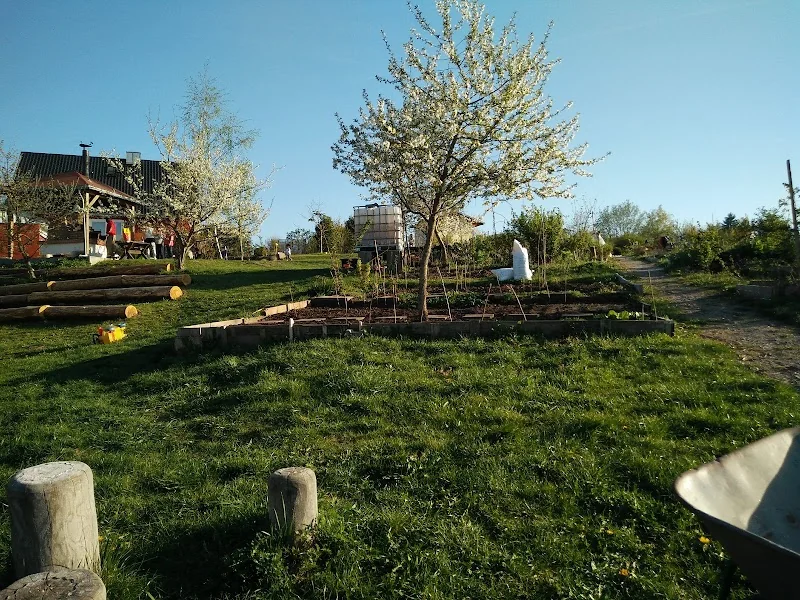
To understand the Gardens of Encounter on a content level, one must consider the facilities of the site. The official page describes an area of 2,750 square meters that has been developed since 2006. The site is divided into a communal area and individual plots that can be used and designed individually. Over the years, fruit trees, hedges, a playground, and a clay oven have been added. This combination of vegetable garden, relaxation area, and social meeting point makes the project so attractive. According to the website, the communal area features a playground with a sandbox, a willow pavilion, a slide, a toilet house with water and electricity, a tool shed, and a garden house with a veranda. Five rainwater cisterns are used for irrigation; when these are empty, the water supply is secured via a tap and hose. A compost area is also included, where new humus is created from garden waste. For events, there is also a large open space, a seating arena for about 100 people, a grill, and a clay oven available. These details are central to the keyword analysis because they explain why users search for seating plans, capacity, facilities, and special places in the garden. There is no rigid hall here, but rather a transformable garden landscape with functional areas. ([gaertenderbegegnung-bayreuth.de](https://www.gaertenderbegegnung-bayreuth.de/unser-garten/))
The plots themselves form the second core of the concept. The website lists 36 plots averaging around 30 square meters, which are individually designed by families, groups, and individuals. Whether raised beds, crater beds, or seas of flowers, the imagination and gardening skills of the participants are explicitly welcome. Chemical aids are not used. This attitude is not only ecologically relevant but also strongly aligned with the search intentions surrounding community gardening, sustainable gardening, and the peculiarities of the facility. The garden is thus not just a backdrop for festivals but a genuine production and meeting space. Fruit trees and hedges provide structure, wild bee walls and nesting aids show the connection to biodiversity, and the communally used area ensures that the place does not fall apart into private small plots. Instead, it connects individual gardening with communal work and celebration. This mix also explains why the Gardens of Encounter are described in reports as a colorful gem, meeting place, and integrative project. The facilities are functional but never cold; they are designed so that people can not only stay there but also contribute, shape, and engage in conversation. ([gaertenderbegegnung-bayreuth.de](https://www.gaertenderbegegnung-bayreuth.de/unser-garten/))
Getting Involved, Gardening Meetings, and Membership in Association Life
A central theme of the website is active participation. The Gardens of Encounter invite not only visits but explicitly participation. The page Become Active lists several opportunities: taking over free plots or new raised beds, gardening on communal areas, caring for trees, hedges, and lawns, undertaking repairs, and implementing new construction and crafting projects. Mentioned are, among other things, new raised beds, hedgehog houses, nesting boxes, irrigation solutions, and improvements to the oven and huts. Additionally, one can help co-organize events. This openness is crucial because it transforms the garden into a lively association space that is not only supported by a few. For search queries regarding participation, membership, and contact, this is the most important message: Those interested can not only watch but are addressed as part of the community. A monthly gardening meeting makes the entry particularly low-threshold. Interested individuals can simply drop by and get to know the association. This is a practical and friendly way to involve new people and fits ideally with the intercultural orientation of the project. ([gaertenderbegegnung-bayreuth.de](https://www.gaertenderbegegnung-bayreuth.de/werde-aktiv/))
Membership and support options complement this participation model. The website does not advertise with high entry barriers but with a mix of active and supportive engagement. Those who want to contribute can become members, take over a plot, or support events; those who prefer to help financially can donate. The official page also points out the non-profit status of the association, which underscores the social orientation and idealistic character of the project. For visitors and seekers, this is relevant because it explains why the place, despite its public openness, has a clear organizational structure. Behind the garden stands an association with a board, statutes, regular meetings, and a long-term perspective. Especially at events like the summer festival or autumn festival, it becomes clear that the practical work in the garden and the cultural dates go hand in hand. Participation is thus not just a side aspect but part of the identity. For families, neighbors, newcomers, refugees, students, and long-time residents of Bayreuth, this creates a space that conveys social belonging through shared activity. Thus, the garden gains its special atmosphere: not through staging but through recurring joint work and the willingness to share responsibility. ([gaertenderbegegnung-bayreuth.de](https://www.gaertenderbegegnung-bayreuth.de/werde-aktiv/))
History, Purpose of the Association, and Intercultural Significance
The history of the Gardens of Encounter began in 2006 when the project was initiated on a site provided by the city of Bayreuth on the outskirts of Saas. This historical context is important because it shows that the place is not a spontaneous leisure concept but arose from a long-term societal concern. The statutes of the association clearly state what it is about: intercultural encounters, tolerance in all areas of culture, understanding among nations, support for people with refugee and migration experiences, education for children, youth, and adults, as well as the promotion of small-scale gardening. Furthermore, the association sees itself as a forum where new forms of communication arise from the diversity of languages, working methods, art, and life experiences. This is the deep cultural significance behind the search terms surrounding the garden. Those searching for the place often seek not only plants and plots but also an example of how neighborhood can function in a diverse city. The garden is thus also a social learning place where ecological practice and social coexistence intertwine. ([duh.de](https://www.duh.de/informieren/natur-und-umwelt-vor-ort/klimaanpassung/stadtnatur/gaerten-der-integration/besondere-projekte-und-initiativen/))
The public perception of this approach is also remarkable. A report by the German Environmental Aid describes the Gardens of Encounter as a place where people of all ages and various cultural backgrounds come together. There, a sense of community grows that has sustained the project over the years. Gardening together here means not only division of labor but also exchange about origins, knowledge, and ways of life. The DUH also emphasizes that people with and without a migration background, refugees, newcomers, and students garden together, creating a colorful garden with plots, fruit trees, and wild corners. This makes it understandable why the facility is also described in reports and awards as a special integration and meeting project. The place stands for a very concrete form of coexistence: not abstractly, but with dirt on hands, with shared building, with harvesting, with celebrating, and with the willingness to learn from one another. Especially at a time when many places only function as a backdrop for consumption, this is a strong counter-model. The Gardens of Encounter show how a sustainable place of social connection can emerge from shared care, open structure, and recurring events. ([duh.de](https://www.duh.de/informieren/natur-und-umwelt-vor-ort/klimaanpassung/stadtnatur/gaerten-der-integration/besondere-projekte-und-initiativen/))
For Families, Guests, and Groups: Why the Place Works So Well
Another reason why the Gardens of Encounter can perform so well in search queries lies in their usability for very different target groups. Families find a facility with a playground, sandbox, slide, willow pavilion, and open spaces where children can not only watch but also move around. Guests attending a summer festival or autumn festival experience a place where there is no distance between the stage and the audience but rather immediate closeness. Groups and associations benefit from the large open space, the seating arena for about 100 people, and the opportunities to celebrate, grill, or participate in creative actions together. Even for those simply seeking tranquility, the garden has much to offer, as it is located on the outskirts of Saas, openly accessible, and carries an atmosphere that is more calming than overstimulating. It is particularly noteworthy that the official pages do not attempt to inflate the place with artificial event language. They simply state the facts: open space, plots, fruit trees, communal use, events, gardening meetings, and participation opportunities. This straightforwardness makes the brand of the place credible. When reading the name Gardens of Encounter, one quickly understands that the term encounter here is not a marketing word but a real principle. ([gaertenderbegegnung-bayreuth.de](https://www.gaertenderbegegnung-bayreuth.de/unser-garten/))
For the search intention behind terms like summer festival with concert, autumn festival, or community garden, it is also important that the garden can be experienced very differently throughout the seasons. In summer, blossoms, warmth, open-air events, and life in the open space are at the forefront. In autumn, it is about harvest, exchange, baked apples, pizza from the wood oven, and a more cozy rhythm. In between, workshops, gardening actions, film evenings, and musical formats emerge. The Gardens of Encounter are therefore not a place with just one core event but a platform for recurring, diverse occasions. This is strong from an SEO perspective because it serves multiple user needs: Those searching for a program find events; those searching for an address get a clear location; those searching for directions find orientation in Saas; those searching for participation receive concrete pathways into the project; and those asking about parking get a realistic classification without false promises. This mix of information, openness, and practical relevance makes the place so interesting for visitors. The Gardens of Encounter Bayreuth thus stand for a piece of lived urban culture that visibly connects nature, community, and cultural exchange. ([gaertenderbegegnung-bayreuth.de](https://www.gaertenderbegegnung-bayreuth.de/?utm_source=openai))
Sources:
- Gardens of Encounter Bayreuth - Official Website
- Gardens of Encounter Bayreuth - Our Garden
- Gardens of Encounter Bayreuth - Get Active
- Gardens of Encounter Bayreuth - Contact and Imprint
- inbayreuth.de - Autumn Festival of the Gardens of Encounter, 16.09.2024
- German Environmental Aid - Gardens of Encounter in Bayreuth
- Mapcarta - Gardens of Encounter Bayreuth
Show moreShow less
Gardens of Encounter | Summer Festival & Autumn Festival
The Gardens of Encounter in Bayreuth are not an anonymous event location, but a vibrant, open garden project that connects nature, community, and cultural exchange. Those looking for a place where communal gardening, celebrating, and getting to know each other truly belong together will find a special meeting point on the outskirts of Bayreuth-Saas. The facility is located at Glockenstraße 32, is open to everyone, and is supported by an association that explicitly aims for intercultural encounters, tolerance, education, and ecological gardening. This very mix makes the search queries surrounding the summer festival, autumn festival, directions, participation, and parking so relevant: Many people want to know not only where the garden is located but also what happens there, how to get there, and how they can become part of the project. The website quickly shows that it is about much more than individual plots. It is about a community project where people from different backgrounds collaborate, celebrate together, and continuously develop the garden. ([gaertenderbegegnung-bayreuth.de](https://www.gaertenderbegegnung-bayreuth.de/unser-garten/))
Summer Festival, Autumn Festival, and Open-Air Cinema as the Heart of the Program
The events are among the strongest search motives surrounding the Gardens of Encounter, and for good reason: The association's calendar shows regular gardening actions and festivals that make the site particularly attractive for visitors. Currently, the website announces gardening actions on May 2 and June 6, 2026, as well as a summer festival on June 20, 2026. In recent years, additional formats have been added, such as a summer festival in 2025, an autumn festival in 2024, a summer concert by Diana4Monday, a workshop titled Fermented Fascination, and various open-air cinema evenings. This mix of neighborhood festival, cultural evening, and participatory events shows that the place lives seasonally and cannot be limited to a single type of event. At the summer festival in 2025, for example, communal celebration, creative actions, and an open invitation to guests were at the center; at the autumn festival in 2025, it was about the harvest, pizza, and baked apples from the wood oven, crafting and painting activities, as well as a cozy gathering with family and friends. This makes the event character of the gardens very tangible: It is about easy accessibility, encounters, and experiencing the garden as a social space. ([gaertenderbegegnung-bayreuth.de](https://www.gaertenderbegegnung-bayreuth.de/))
The connection to the season is particularly strong. The summer festival ties in with the blooming period of the garden when plants, plots, and communal areas are visibly at the center. The autumn festival, on the other hand, uses the harvest time to reflect on the year together, make new contacts, and celebrate the garden as a place of abundance. The official reporting explicitly describes coffee, cake, hearty dishes, refreshing drinks, and a batik workshop at the autumn festival in 2024; the event took place at the site on Glockenstraße 32. The open-air cinema evenings also showcase the special atmosphere of the place: In 2024, a summer film evening with free admission and a donation recommendation was announced, while in 2025, a cinema evening under the open sky attracted visitors with a large screen. The association thus uses not only classic gardening days but also cultural formats that open the place to different target groups. This is reflected in the Google search queries that refer to specific dates, seasonal highlights, and the need for a varied program. Those searching for summer festivals, autumn festivals, or open-air cinema are, in truth, looking for a place where culture does not take place abstractly but right in the garden. ([inbayreuth.de](https://www.inbayreuth.de/interkulturelle-gaerten-bayreuth/cnt-id-ps-7e48330d-7026-492d-af6b-987aa1367969))
The Location in Bayreuth-Saas, Directions, and Practical Orientation
The Gardens of Encounter are located on the outskirts of the Saas district in Bayreuth. This location is convenient for many visitors because it is not in the midst of dense city traffic, while still being well connected to the local road network. The official website lists Glockenstraße 32 as the garden address, while the imprint page additionally states the association's address at Schulstraße 7. For orientation, it is particularly important that the site is openly accessible and does not function like a closed event hall. Map data categorizes the location as a small garden facility in Bayreuth and mentions the surroundings with BSC Saas, the school sports field Lerchenbühlschule, and a bus stop Glockenstraße about 160 meters away. It becomes clear: Anyone heading to the garden for a visit, a festival, or a work assignment will find it in a quiet, residential environment with pedestrian access to public transport. This is particularly relevant for search queries regarding directions and connections, as the place is known but does not present itself like a classic event operation with a large visitor parking garage. ([gaertenderbegegnung-bayreuth.de](https://www.gaertenderbegegnung-bayreuth.de/unser-garten/))
When it comes to parking, careful classification is important. The official pages do not highlight any dedicated visitor parking spaces, and that is why the combination of address, city location, and public transport is so helpful. The proximity to the Glockenstraße stop makes arriving by bus and on foot practical; at the same time, drivers should plan for the parking situation in the residential area on the outskirts of Saas before a visit. This honesty is crucial for SEO and user inquiries: There is no large parking garage here, but rather a garden-adjacent, more neighborhood-oriented location. This fits the character of the place, as the Gardens of Encounter see themselves as an open meeting point and not as a large event center. Therefore, anyone attending a summer festival or autumn festival should pay attention to simple, local travel, allow some time for orientation, and be aware that the charm of the place lies precisely in its tranquility. The location also explains why the garden works well for people from the area, for families, association members, and interested guests alike: It is close enough for spontaneous visits and far enough from the city center to develop a true garden atmosphere. ([gaertenderbegegnung-bayreuth.de](https://www.gaertenderbegegnung-bayreuth.de/unser-garten/))
Facilities, Plots, and Communal Areas
To understand the Gardens of Encounter on a content level, one must consider the facilities of the site. The official page describes an area of 2,750 square meters that has been developed since 2006. The site is divided into a communal area and individual plots that can be used and designed individually. Over the years, fruit trees, hedges, a playground, and a clay oven have been added. This combination of vegetable garden, relaxation area, and social meeting point makes the project so attractive. According to the website, the communal area features a playground with a sandbox, a willow pavilion, a slide, a toilet house with water and electricity, a tool shed, and a garden house with a veranda. Five rainwater cisterns are used for irrigation; when these are empty, the water supply is secured via a tap and hose. A compost area is also included, where new humus is created from garden waste. For events, there is also a large open space, a seating arena for about 100 people, a grill, and a clay oven available. These details are central to the keyword analysis because they explain why users search for seating plans, capacity, facilities, and special places in the garden. There is no rigid hall here, but rather a transformable garden landscape with functional areas. ([gaertenderbegegnung-bayreuth.de](https://www.gaertenderbegegnung-bayreuth.de/unser-garten/))
The plots themselves form the second core of the concept. The website lists 36 plots averaging around 30 square meters, which are individually designed by families, groups, and individuals. Whether raised beds, crater beds, or seas of flowers, the imagination and gardening skills of the participants are explicitly welcome. Chemical aids are not used. This attitude is not only ecologically relevant but also strongly aligned with the search intentions surrounding community gardening, sustainable gardening, and the peculiarities of the facility. The garden is thus not just a backdrop for festivals but a genuine production and meeting space. Fruit trees and hedges provide structure, wild bee walls and nesting aids show the connection to biodiversity, and the communally used area ensures that the place does not fall apart into private small plots. Instead, it connects individual gardening with communal work and celebration. This mix also explains why the Gardens of Encounter are described in reports as a colorful gem, meeting place, and integrative project. The facilities are functional but never cold; they are designed so that people can not only stay there but also contribute, shape, and engage in conversation. ([gaertenderbegegnung-bayreuth.de](https://www.gaertenderbegegnung-bayreuth.de/unser-garten/))
Getting Involved, Gardening Meetings, and Membership in Association Life
A central theme of the website is active participation. The Gardens of Encounter invite not only visits but explicitly participation. The page Become Active lists several opportunities: taking over free plots or new raised beds, gardening on communal areas, caring for trees, hedges, and lawns, undertaking repairs, and implementing new construction and crafting projects. Mentioned are, among other things, new raised beds, hedgehog houses, nesting boxes, irrigation solutions, and improvements to the oven and huts. Additionally, one can help co-organize events. This openness is crucial because it transforms the garden into a lively association space that is not only supported by a few. For search queries regarding participation, membership, and contact, this is the most important message: Those interested can not only watch but are addressed as part of the community. A monthly gardening meeting makes the entry particularly low-threshold. Interested individuals can simply drop by and get to know the association. This is a practical and friendly way to involve new people and fits ideally with the intercultural orientation of the project. ([gaertenderbegegnung-bayreuth.de](https://www.gaertenderbegegnung-bayreuth.de/werde-aktiv/))
Membership and support options complement this participation model. The website does not advertise with high entry barriers but with a mix of active and supportive engagement. Those who want to contribute can become members, take over a plot, or support events; those who prefer to help financially can donate. The official page also points out the non-profit status of the association, which underscores the social orientation and idealistic character of the project. For visitors and seekers, this is relevant because it explains why the place, despite its public openness, has a clear organizational structure. Behind the garden stands an association with a board, statutes, regular meetings, and a long-term perspective. Especially at events like the summer festival or autumn festival, it becomes clear that the practical work in the garden and the cultural dates go hand in hand. Participation is thus not just a side aspect but part of the identity. For families, neighbors, newcomers, refugees, students, and long-time residents of Bayreuth, this creates a space that conveys social belonging through shared activity. Thus, the garden gains its special atmosphere: not through staging but through recurring joint work and the willingness to share responsibility. ([gaertenderbegegnung-bayreuth.de](https://www.gaertenderbegegnung-bayreuth.de/werde-aktiv/))
History, Purpose of the Association, and Intercultural Significance
The history of the Gardens of Encounter began in 2006 when the project was initiated on a site provided by the city of Bayreuth on the outskirts of Saas. This historical context is important because it shows that the place is not a spontaneous leisure concept but arose from a long-term societal concern. The statutes of the association clearly state what it is about: intercultural encounters, tolerance in all areas of culture, understanding among nations, support for people with refugee and migration experiences, education for children, youth, and adults, as well as the promotion of small-scale gardening. Furthermore, the association sees itself as a forum where new forms of communication arise from the diversity of languages, working methods, art, and life experiences. This is the deep cultural significance behind the search terms surrounding the garden. Those searching for the place often seek not only plants and plots but also an example of how neighborhood can function in a diverse city. The garden is thus also a social learning place where ecological practice and social coexistence intertwine. ([duh.de](https://www.duh.de/informieren/natur-und-umwelt-vor-ort/klimaanpassung/stadtnatur/gaerten-der-integration/besondere-projekte-und-initiativen/))
The public perception of this approach is also remarkable. A report by the German Environmental Aid describes the Gardens of Encounter as a place where people of all ages and various cultural backgrounds come together. There, a sense of community grows that has sustained the project over the years. Gardening together here means not only division of labor but also exchange about origins, knowledge, and ways of life. The DUH also emphasizes that people with and without a migration background, refugees, newcomers, and students garden together, creating a colorful garden with plots, fruit trees, and wild corners. This makes it understandable why the facility is also described in reports and awards as a special integration and meeting project. The place stands for a very concrete form of coexistence: not abstractly, but with dirt on hands, with shared building, with harvesting, with celebrating, and with the willingness to learn from one another. Especially at a time when many places only function as a backdrop for consumption, this is a strong counter-model. The Gardens of Encounter show how a sustainable place of social connection can emerge from shared care, open structure, and recurring events. ([duh.de](https://www.duh.de/informieren/natur-und-umwelt-vor-ort/klimaanpassung/stadtnatur/gaerten-der-integration/besondere-projekte-und-initiativen/))
For Families, Guests, and Groups: Why the Place Works So Well
Another reason why the Gardens of Encounter can perform so well in search queries lies in their usability for very different target groups. Families find a facility with a playground, sandbox, slide, willow pavilion, and open spaces where children can not only watch but also move around. Guests attending a summer festival or autumn festival experience a place where there is no distance between the stage and the audience but rather immediate closeness. Groups and associations benefit from the large open space, the seating arena for about 100 people, and the opportunities to celebrate, grill, or participate in creative actions together. Even for those simply seeking tranquility, the garden has much to offer, as it is located on the outskirts of Saas, openly accessible, and carries an atmosphere that is more calming than overstimulating. It is particularly noteworthy that the official pages do not attempt to inflate the place with artificial event language. They simply state the facts: open space, plots, fruit trees, communal use, events, gardening meetings, and participation opportunities. This straightforwardness makes the brand of the place credible. When reading the name Gardens of Encounter, one quickly understands that the term encounter here is not a marketing word but a real principle. ([gaertenderbegegnung-bayreuth.de](https://www.gaertenderbegegnung-bayreuth.de/unser-garten/))
For the search intention behind terms like summer festival with concert, autumn festival, or community garden, it is also important that the garden can be experienced very differently throughout the seasons. In summer, blossoms, warmth, open-air events, and life in the open space are at the forefront. In autumn, it is about harvest, exchange, baked apples, pizza from the wood oven, and a more cozy rhythm. In between, workshops, gardening actions, film evenings, and musical formats emerge. The Gardens of Encounter are therefore not a place with just one core event but a platform for recurring, diverse occasions. This is strong from an SEO perspective because it serves multiple user needs: Those searching for a program find events; those searching for an address get a clear location; those searching for directions find orientation in Saas; those searching for participation receive concrete pathways into the project; and those asking about parking get a realistic classification without false promises. This mix of information, openness, and practical relevance makes the place so interesting for visitors. The Gardens of Encounter Bayreuth thus stand for a piece of lived urban culture that visibly connects nature, community, and cultural exchange. ([gaertenderbegegnung-bayreuth.de](https://www.gaertenderbegegnung-bayreuth.de/?utm_source=openai))
Sources:
- Gardens of Encounter Bayreuth - Official Website
- Gardens of Encounter Bayreuth - Our Garden
- Gardens of Encounter Bayreuth - Get Active
- Gardens of Encounter Bayreuth - Contact and Imprint
- inbayreuth.de - Autumn Festival of the Gardens of Encounter, 16.09.2024
- German Environmental Aid - Gardens of Encounter in Bayreuth
- Mapcarta - Gardens of Encounter Bayreuth
Gardens of Encounter | Summer Festival & Autumn Festival
The Gardens of Encounter in Bayreuth are not an anonymous event location, but a vibrant, open garden project that connects nature, community, and cultural exchange. Those looking for a place where communal gardening, celebrating, and getting to know each other truly belong together will find a special meeting point on the outskirts of Bayreuth-Saas. The facility is located at Glockenstraße 32, is open to everyone, and is supported by an association that explicitly aims for intercultural encounters, tolerance, education, and ecological gardening. This very mix makes the search queries surrounding the summer festival, autumn festival, directions, participation, and parking so relevant: Many people want to know not only where the garden is located but also what happens there, how to get there, and how they can become part of the project. The website quickly shows that it is about much more than individual plots. It is about a community project where people from different backgrounds collaborate, celebrate together, and continuously develop the garden. ([gaertenderbegegnung-bayreuth.de](https://www.gaertenderbegegnung-bayreuth.de/unser-garten/))
Summer Festival, Autumn Festival, and Open-Air Cinema as the Heart of the Program
The events are among the strongest search motives surrounding the Gardens of Encounter, and for good reason: The association's calendar shows regular gardening actions and festivals that make the site particularly attractive for visitors. Currently, the website announces gardening actions on May 2 and June 6, 2026, as well as a summer festival on June 20, 2026. In recent years, additional formats have been added, such as a summer festival in 2025, an autumn festival in 2024, a summer concert by Diana4Monday, a workshop titled Fermented Fascination, and various open-air cinema evenings. This mix of neighborhood festival, cultural evening, and participatory events shows that the place lives seasonally and cannot be limited to a single type of event. At the summer festival in 2025, for example, communal celebration, creative actions, and an open invitation to guests were at the center; at the autumn festival in 2025, it was about the harvest, pizza, and baked apples from the wood oven, crafting and painting activities, as well as a cozy gathering with family and friends. This makes the event character of the gardens very tangible: It is about easy accessibility, encounters, and experiencing the garden as a social space. ([gaertenderbegegnung-bayreuth.de](https://www.gaertenderbegegnung-bayreuth.de/))
The connection to the season is particularly strong. The summer festival ties in with the blooming period of the garden when plants, plots, and communal areas are visibly at the center. The autumn festival, on the other hand, uses the harvest time to reflect on the year together, make new contacts, and celebrate the garden as a place of abundance. The official reporting explicitly describes coffee, cake, hearty dishes, refreshing drinks, and a batik workshop at the autumn festival in 2024; the event took place at the site on Glockenstraße 32. The open-air cinema evenings also showcase the special atmosphere of the place: In 2024, a summer film evening with free admission and a donation recommendation was announced, while in 2025, a cinema evening under the open sky attracted visitors with a large screen. The association thus uses not only classic gardening days but also cultural formats that open the place to different target groups. This is reflected in the Google search queries that refer to specific dates, seasonal highlights, and the need for a varied program. Those searching for summer festivals, autumn festivals, or open-air cinema are, in truth, looking for a place where culture does not take place abstractly but right in the garden. ([inbayreuth.de](https://www.inbayreuth.de/interkulturelle-gaerten-bayreuth/cnt-id-ps-7e48330d-7026-492d-af6b-987aa1367969))
The Location in Bayreuth-Saas, Directions, and Practical Orientation
The Gardens of Encounter are located on the outskirts of the Saas district in Bayreuth. This location is convenient for many visitors because it is not in the midst of dense city traffic, while still being well connected to the local road network. The official website lists Glockenstraße 32 as the garden address, while the imprint page additionally states the association's address at Schulstraße 7. For orientation, it is particularly important that the site is openly accessible and does not function like a closed event hall. Map data categorizes the location as a small garden facility in Bayreuth and mentions the surroundings with BSC Saas, the school sports field Lerchenbühlschule, and a bus stop Glockenstraße about 160 meters away. It becomes clear: Anyone heading to the garden for a visit, a festival, or a work assignment will find it in a quiet, residential environment with pedestrian access to public transport. This is particularly relevant for search queries regarding directions and connections, as the place is known but does not present itself like a classic event operation with a large visitor parking garage. ([gaertenderbegegnung-bayreuth.de](https://www.gaertenderbegegnung-bayreuth.de/unser-garten/))
When it comes to parking, careful classification is important. The official pages do not highlight any dedicated visitor parking spaces, and that is why the combination of address, city location, and public transport is so helpful. The proximity to the Glockenstraße stop makes arriving by bus and on foot practical; at the same time, drivers should plan for the parking situation in the residential area on the outskirts of Saas before a visit. This honesty is crucial for SEO and user inquiries: There is no large parking garage here, but rather a garden-adjacent, more neighborhood-oriented location. This fits the character of the place, as the Gardens of Encounter see themselves as an open meeting point and not as a large event center. Therefore, anyone attending a summer festival or autumn festival should pay attention to simple, local travel, allow some time for orientation, and be aware that the charm of the place lies precisely in its tranquility. The location also explains why the garden works well for people from the area, for families, association members, and interested guests alike: It is close enough for spontaneous visits and far enough from the city center to develop a true garden atmosphere. ([gaertenderbegegnung-bayreuth.de](https://www.gaertenderbegegnung-bayreuth.de/unser-garten/))
Facilities, Plots, and Communal Areas
To understand the Gardens of Encounter on a content level, one must consider the facilities of the site. The official page describes an area of 2,750 square meters that has been developed since 2006. The site is divided into a communal area and individual plots that can be used and designed individually. Over the years, fruit trees, hedges, a playground, and a clay oven have been added. This combination of vegetable garden, relaxation area, and social meeting point makes the project so attractive. According to the website, the communal area features a playground with a sandbox, a willow pavilion, a slide, a toilet house with water and electricity, a tool shed, and a garden house with a veranda. Five rainwater cisterns are used for irrigation; when these are empty, the water supply is secured via a tap and hose. A compost area is also included, where new humus is created from garden waste. For events, there is also a large open space, a seating arena for about 100 people, a grill, and a clay oven available. These details are central to the keyword analysis because they explain why users search for seating plans, capacity, facilities, and special places in the garden. There is no rigid hall here, but rather a transformable garden landscape with functional areas. ([gaertenderbegegnung-bayreuth.de](https://www.gaertenderbegegnung-bayreuth.de/unser-garten/))
The plots themselves form the second core of the concept. The website lists 36 plots averaging around 30 square meters, which are individually designed by families, groups, and individuals. Whether raised beds, crater beds, or seas of flowers, the imagination and gardening skills of the participants are explicitly welcome. Chemical aids are not used. This attitude is not only ecologically relevant but also strongly aligned with the search intentions surrounding community gardening, sustainable gardening, and the peculiarities of the facility. The garden is thus not just a backdrop for festivals but a genuine production and meeting space. Fruit trees and hedges provide structure, wild bee walls and nesting aids show the connection to biodiversity, and the communally used area ensures that the place does not fall apart into private small plots. Instead, it connects individual gardening with communal work and celebration. This mix also explains why the Gardens of Encounter are described in reports as a colorful gem, meeting place, and integrative project. The facilities are functional but never cold; they are designed so that people can not only stay there but also contribute, shape, and engage in conversation. ([gaertenderbegegnung-bayreuth.de](https://www.gaertenderbegegnung-bayreuth.de/unser-garten/))
Getting Involved, Gardening Meetings, and Membership in Association Life
A central theme of the website is active participation. The Gardens of Encounter invite not only visits but explicitly participation. The page Become Active lists several opportunities: taking over free plots or new raised beds, gardening on communal areas, caring for trees, hedges, and lawns, undertaking repairs, and implementing new construction and crafting projects. Mentioned are, among other things, new raised beds, hedgehog houses, nesting boxes, irrigation solutions, and improvements to the oven and huts. Additionally, one can help co-organize events. This openness is crucial because it transforms the garden into a lively association space that is not only supported by a few. For search queries regarding participation, membership, and contact, this is the most important message: Those interested can not only watch but are addressed as part of the community. A monthly gardening meeting makes the entry particularly low-threshold. Interested individuals can simply drop by and get to know the association. This is a practical and friendly way to involve new people and fits ideally with the intercultural orientation of the project. ([gaertenderbegegnung-bayreuth.de](https://www.gaertenderbegegnung-bayreuth.de/werde-aktiv/))
Membership and support options complement this participation model. The website does not advertise with high entry barriers but with a mix of active and supportive engagement. Those who want to contribute can become members, take over a plot, or support events; those who prefer to help financially can donate. The official page also points out the non-profit status of the association, which underscores the social orientation and idealistic character of the project. For visitors and seekers, this is relevant because it explains why the place, despite its public openness, has a clear organizational structure. Behind the garden stands an association with a board, statutes, regular meetings, and a long-term perspective. Especially at events like the summer festival or autumn festival, it becomes clear that the practical work in the garden and the cultural dates go hand in hand. Participation is thus not just a side aspect but part of the identity. For families, neighbors, newcomers, refugees, students, and long-time residents of Bayreuth, this creates a space that conveys social belonging through shared activity. Thus, the garden gains its special atmosphere: not through staging but through recurring joint work and the willingness to share responsibility. ([gaertenderbegegnung-bayreuth.de](https://www.gaertenderbegegnung-bayreuth.de/werde-aktiv/))
History, Purpose of the Association, and Intercultural Significance
The history of the Gardens of Encounter began in 2006 when the project was initiated on a site provided by the city of Bayreuth on the outskirts of Saas. This historical context is important because it shows that the place is not a spontaneous leisure concept but arose from a long-term societal concern. The statutes of the association clearly state what it is about: intercultural encounters, tolerance in all areas of culture, understanding among nations, support for people with refugee and migration experiences, education for children, youth, and adults, as well as the promotion of small-scale gardening. Furthermore, the association sees itself as a forum where new forms of communication arise from the diversity of languages, working methods, art, and life experiences. This is the deep cultural significance behind the search terms surrounding the garden. Those searching for the place often seek not only plants and plots but also an example of how neighborhood can function in a diverse city. The garden is thus also a social learning place where ecological practice and social coexistence intertwine. ([duh.de](https://www.duh.de/informieren/natur-und-umwelt-vor-ort/klimaanpassung/stadtnatur/gaerten-der-integration/besondere-projekte-und-initiativen/))
The public perception of this approach is also remarkable. A report by the German Environmental Aid describes the Gardens of Encounter as a place where people of all ages and various cultural backgrounds come together. There, a sense of community grows that has sustained the project over the years. Gardening together here means not only division of labor but also exchange about origins, knowledge, and ways of life. The DUH also emphasizes that people with and without a migration background, refugees, newcomers, and students garden together, creating a colorful garden with plots, fruit trees, and wild corners. This makes it understandable why the facility is also described in reports and awards as a special integration and meeting project. The place stands for a very concrete form of coexistence: not abstractly, but with dirt on hands, with shared building, with harvesting, with celebrating, and with the willingness to learn from one another. Especially at a time when many places only function as a backdrop for consumption, this is a strong counter-model. The Gardens of Encounter show how a sustainable place of social connection can emerge from shared care, open structure, and recurring events. ([duh.de](https://www.duh.de/informieren/natur-und-umwelt-vor-ort/klimaanpassung/stadtnatur/gaerten-der-integration/besondere-projekte-und-initiativen/))
For Families, Guests, and Groups: Why the Place Works So Well
Another reason why the Gardens of Encounter can perform so well in search queries lies in their usability for very different target groups. Families find a facility with a playground, sandbox, slide, willow pavilion, and open spaces where children can not only watch but also move around. Guests attending a summer festival or autumn festival experience a place where there is no distance between the stage and the audience but rather immediate closeness. Groups and associations benefit from the large open space, the seating arena for about 100 people, and the opportunities to celebrate, grill, or participate in creative actions together. Even for those simply seeking tranquility, the garden has much to offer, as it is located on the outskirts of Saas, openly accessible, and carries an atmosphere that is more calming than overstimulating. It is particularly noteworthy that the official pages do not attempt to inflate the place with artificial event language. They simply state the facts: open space, plots, fruit trees, communal use, events, gardening meetings, and participation opportunities. This straightforwardness makes the brand of the place credible. When reading the name Gardens of Encounter, one quickly understands that the term encounter here is not a marketing word but a real principle. ([gaertenderbegegnung-bayreuth.de](https://www.gaertenderbegegnung-bayreuth.de/unser-garten/))
For the search intention behind terms like summer festival with concert, autumn festival, or community garden, it is also important that the garden can be experienced very differently throughout the seasons. In summer, blossoms, warmth, open-air events, and life in the open space are at the forefront. In autumn, it is about harvest, exchange, baked apples, pizza from the wood oven, and a more cozy rhythm. In between, workshops, gardening actions, film evenings, and musical formats emerge. The Gardens of Encounter are therefore not a place with just one core event but a platform for recurring, diverse occasions. This is strong from an SEO perspective because it serves multiple user needs: Those searching for a program find events; those searching for an address get a clear location; those searching for directions find orientation in Saas; those searching for participation receive concrete pathways into the project; and those asking about parking get a realistic classification without false promises. This mix of information, openness, and practical relevance makes the place so interesting for visitors. The Gardens of Encounter Bayreuth thus stand for a piece of lived urban culture that visibly connects nature, community, and cultural exchange. ([gaertenderbegegnung-bayreuth.de](https://www.gaertenderbegegnung-bayreuth.de/?utm_source=openai))
Sources:
- Gardens of Encounter Bayreuth - Official Website
- Gardens of Encounter Bayreuth - Our Garden
- Gardens of Encounter Bayreuth - Get Active
- Gardens of Encounter Bayreuth - Contact and Imprint
- inbayreuth.de - Autumn Festival of the Gardens of Encounter, 16.09.2024
- German Environmental Aid - Gardens of Encounter in Bayreuth
- Mapcarta - Gardens of Encounter Bayreuth
Upcoming Events
No events found
Frequently Asked Questions
Reviews
Jerzy Weiland
8. April 2025
A community garden that brings together multi-national owners of small plots. The site offers a sufficient supply of equipment and furnishings for gatherings and recreation. Located on the coast of Bayreuth, away from the hustle and bustle of the city, it's a great place for friendly contacts in the lap of nature. I highly recommend it.
Nino Parulua
13. June 2024
Here, you find inner peace and forget everything. Simply beautiful. Highly recommended.
JABYA
27. December 2017
International and joint Garden in Bayreuth.
Patrick Emmler (PiKa)
12. July 2023
A place with a future.
stone wood
11. July 2018
Very nice facility.