
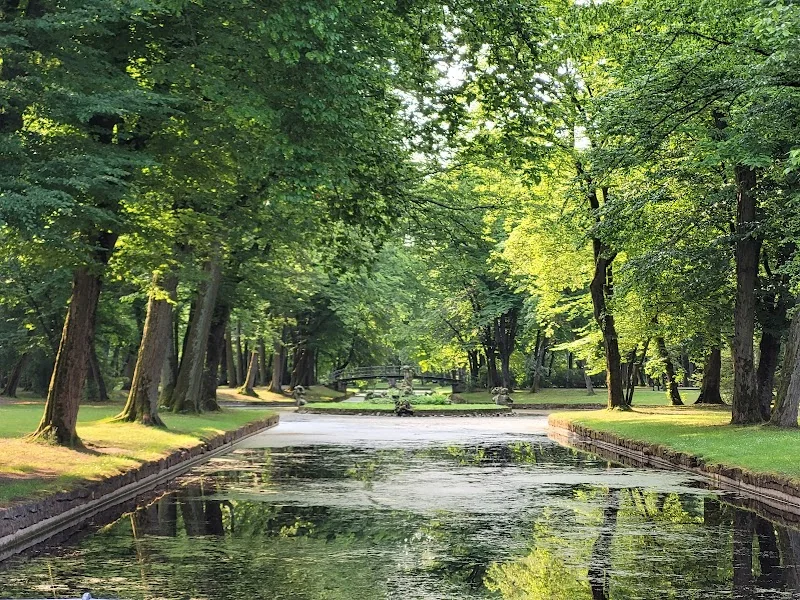
Im Hofgarten, Bayreuth
Im Hofgarten, 95444 Bayreuth, Germany
Hofgarten Bayreuth | Opening Hours & Parking
The Hofgarten Bayreuth is one of the most important historical open spaces in the city center and is located directly at the New Palace. Today, the facility appears as a green oasis between culture, history, and everyday life: it is open year-round, freely accessible, and protected as a garden monument. Those strolling through Bayreuth will find wide paths, old tree axes, quiet meadows, and a layout whose design language originates from the Baroque period while still allowing many later modifications to be visible. The Hofgarten is suitable for a short break as well as for a longer walk, for families visiting the playground just as much as for people simply seeking shade, tranquility, and a central place in nature. Its prominent location in the city makes it a typical Bayreuth spot: close to museums, near the pedestrian zone, close to the history of the Margraviate period, and at the same time open to today's everyday life. ([schloesser.bayern.de](https://www.schloesser.bayern.de/deutsch/garten/objekte/bay_ns.htm))
Opening Hours, Address, and Directions to Hofgarten Bayreuth
Officially, the Hofgarten is located at Ludwigstraße 21 in 95444 Bayreuth. The Bavarian Palace Administration lists the garden as open year-round, and the tourism website additionally states that it is accessible 24 hours a day and free of charge. For visitors, this means: The Hofgarten is not a classic event venue with fixed ticket office hours, but a public park that can be integrated into the city tour at almost any time of day. Those exploring the city on foot can easily reach the facility via the historic city center and the New Palace, which directly adjoins the park. The official tourism site refers to the website The World of Wilhelmine for current information, so changes, notices, or additional visitor information can be found there. ([schloesser.bayern.de](https://www.schloesser.bayern.de/deutsch/garten/objekte/bay_ns.htm))
The location is ideal for a park visit because the Hofgarten is situated right in the center of Bayreuth and can thus be perfectly integrated into a walk through the city. The official orientation point for public transport is the Sternplatz stop, from which the park is easily accessible. Those who want to experience Bayreuth not just as a destination but as a walking city can combine the Hofgarten with the New Palace, the pedestrian zone, and the neighboring cultural sites. This is why many visitors search for terms like address, route, or maps: The Hofgarten is quickly explained but best experienced live, as its effect lives from the direct connection of architecture, garden art, and urban location. ([schloesser.bayern.de](https://www.schloesser.bayern.de/deutsch/garten/objekte/bay_ns.htm))
Parking, Maps, and Routes around Hofgarten Bayreuth
For arrival by car, the city center of Bayreuth is particularly relevant. The city states that there are over 6,000 public and private parking spaces available within 500 meters of the city center in parking garages, underground garages, parking lots, and along the streets. This is a significant advantage for an inner-city park visit, as you can access the Hofgarten not via an isolated suburban parking lot but directly through the dense parking network of the city. The official information about the city center also mentions a wide range of bus, two-wheeler, and camper parking spaces, as well as an overview of parking lots. Therefore, those specifically looking to park at Hofgarten Bayreuth should focus on the inner-city parking spaces rather than a single parking strip on-site. ([bayreuth.de](https://www.bayreuth.de/rathaus-buergerservice/verkehr-oepnv/parken-in-der-innenstadt/))
Additionally, the official Hofgarten page links to a site plan as well as Google Maps and refers to parking options around the Bayreuth city center for directions. This makes orientation easy for guests arriving from multiple directions or wishing to combine their walk with other attractions. This is particularly convenient for visitors who want to discover Bayreuth in one day: park in the city center, reach the Hofgarten on foot, and then include the New Palace and other destinations in the center. Therefore, a clear principle applies to route planning and maps: The Hofgarten is not a remote location but a central part of the Bayreuth urban fabric that can be easily connected with an inner-city parking space and a short walk. ([schloesser.bayern.de](https://www.schloesser.bayern.de/deutsch/garten/objekte/bay_ns.htm))
Playground, Sunbathing Area, and Relaxation in Hofgarten Bayreuth
The Hofgarten is not only a monument of garden art but also a practical recreational space. According to the official tourism description, a new playground was inaugurated in the back part of the facility in summer 2017. It carries the motto Playing with Wilhelmine and features a play castle, swings, and other equipment that reflects the historical surroundings of the New Palace. This makes the Hofgarten particularly interesting for families, as a walk in the green can be combined with a child-friendly stop. Additionally, there is an officially designated sunbathing area in the eastern part of the Hofgarten, making the park a place for sun breaks, reading, short picnics, and quiet stays. The fact that this area is deliberately designated is also shown by the park regulations: the remaining meadow and bed areas are to be preserved. ([bayreuth-tourismus.de](https://www.bayreuth-tourismus.de/sehenswertes/gaerten-und-parks/hofgarten/?utm_source=openai))
The atmosphere of the Hofgarten is described on the official information page as an oasis of relaxation and tranquility. This fits its function in the daily life of the city: here, people stroll during their lunch break, take a small timeout while exploring the city center, or simply use the park as a quiet counterpoint to the densely built streets around. The broad path structure, the large lawn areas, and the shady spots under old trees make the Hofgarten a place where one does not just walk through but consciously lingers. This is also important for search queries like photos or café: The Hofgarten itself primarily stands for open green spaces and historical garden architecture, while the gastronomic offerings are more likely to be found in the nearby surroundings due to the city center location. This mixture of tranquility, centrality, and short pathways makes the park so attractive. ([schloesser.bayern.de](https://www.schloesser.bayern.de/deutsch/service/infomat/screen-pdf/bayreuth_hofgarten_dt.pdf))
History and Garden Art: From Utility Garden to Baroque Park
The history of the Hofgarten goes back a long way. The official tourism site traces its beginnings back to the 16th century and mentions a smaller, enclosed utility and flower garden as early as 1580. When Margrave Christian moved his residence to Bayreuth, the plan was made to turn this garden into a representative pleasure garden. Over time, the facility was expanded and even had its own riding and racing track as well as a ballroom from 1626 onwards. It is particularly important that the artistic design of the garden only becomes clearly verifiable from the mid-18th century onwards. This explains the current mixture of older structures and later modifications: The Hofgarten is not a rigid remnant but a facility that has grown over centuries. ([bayreuth-tourismus.de](https://www.bayreuth-tourismus.de/sehenswertes/gaerten-und-parks/hofgarten/?utm_source=openai))
The Bavarian Palace Administration describes the significant renovation phase after the construction of the New Palace: The area, which had been in margravial possession since the end of the 16th century, was expanded, and the Margrave couple Friedrich and Wilhelmine of Brandenburg-Bayreuth had avenues, hedge quarters, arbors, and parterres laid out. The central axis with a right-angled canal and four islands became particularly formative. At the end of the 18th century, Margrave Alexander intended to transform the garden into a park in the English style with winding paths and freer plantings, but the basic features of the geometric garden are still recognizable today. These include the canal, the three main avenues, and the reconstructed parterre in front of the south wing of the New Palace, which was restored in 1990. This mixture of Baroque, later landscape ideas, and modern maintenance makes the facility unique. ([schloesser.bayern.de](https://www.schloesser.bayern.de/deutsch/garten/objekte/bay_ns.htm))
The historical image also includes the sun temple or monopteros in the southern part of the Hofgarten, which was built in 1805 in honor of the Prussian Queen Louise. It was originally designed as a music pavilion and is still used today for smaller concerts. Therefore, those looking for size will not find an exact square meter figure on the official pages, but a clear sense of spaciousness: The Hofgarten is designed through its axes, watercourses, islands, and rows of trees so that one experiences the extent while walking. The park was not only a representative setting for the court but also a place for festivities, strolling, and social games; its historical use is still visible in its spatial structure. ([bayreuth-tourismus.de](https://www.bayreuth-tourismus.de/sehenswertes/gaerten-und-parks/hofgarten/?utm_source=openai))
Dogs, Rules, and Protection of the Garden Monument
The Hofgarten is a garden monument and at the same time a sensitive habitat for people, animals, and plants. Therefore, the Bavarian Palace Administration issued a park regulation in 2012 to counteract pollution, disturbances, and vandalism. The official notices emphasize that pedestrians have priority throughout the garden. Cycling is only allowed on the designated bike path along the eastern boundary, and lawn and bed areas may not be entered, except for the expressly designated sunbathing area at the eastern end. Those who use the Hofgarten respectfully help directly to preserve its historical appearance and recreational function. ([schloesser.bayern.de](https://www.schloesser.bayern.de/deutsch/service/infomat/screen-pdf/bayreuth_hofgarten_dt.pdf))
Even with the other rules, it is clear that the park is primarily intended as a quiet place. Camping and overnight stays, barbecuing and lighting fires, swimming, drones and other flying devices, as well as commercial activities without permission are prohibited; even playing music is not allowed without permission. Dogs are welcome, but must be kept on a short leash throughout the garden area, and their waste must be disposed of. The park regulation also explicitly states that violations can be punished as administrative offenses by the police. Therefore, those looking for police or rules will find a clear answer here: The Hofgarten is open and friendly, but not arbitrarily usable. The rules are not meant to deter but to protect a sensitive historical place in the middle of the city. ([schloesser.bayern.de](https://www.schloesser.bayern.de/deutsch/service/infomat/screen-pdf/bayreuth_hofgarten_dt.pdf))
Especially for visitors with children or dogs, this set of rules is helpful as it organizes the park as a shared space for all generations. The designated sunbathing area creates space for relaxed lingering, while the remaining green areas are preserved. Thus, the Hofgarten remains not only beautiful but also functional: it is a walking park, monument, relaxation zone, and natural space at the same time. This balance between use and protection is an essential part of its quality. Therefore, those who visit the Hofgarten attentively experience not only a sight but also a good example of how historical garden art can be used responsibly today. ([schloesser.bayern.de](https://www.schloesser.bayern.de/deutsch/service/infomat/screen-pdf/bayreuth_hofgarten_dt.pdf))
Neighboring Attractions, Café, and Walking Tip in the Bayreuth Center
The Hofgarten is particularly attractive because it does not stand alone but is directly embedded in a dense network of cultural sites. The tourism site points out that two other attractions worth visiting are connected to the Mailbahnallee in the Hofgarten: the German Freemason Museum and Haus Wahnfried. The latter is located a few hundred meters to the east and is easily reachable on foot; it is also home to the Richard Wagner Museum. Thus, the Hofgarten not only offers nature but also a seamless transition to Bayreuth's cultural history. Therefore, those visiting the park quickly get an impression of how closely garden art, the residence city, and music history are interconnected in Bayreuth. ([bayreuth-tourismus.de](https://www.bayreuth-tourismus.de/sehenswertes/gaerten-und-parks/hofgarten/?utm_source=openai))
For a relaxed city walk, it is advisable to combine the Hofgarten with the New Palace and the pedestrian zone. The tourism site describes the park as the green lung of the city center and emphasizes that locals like to use it for their lunch breaks on one of the many benches. Although no café is mentioned as a main attraction on the verified official pages of the Hofgarten itself, its central location is a clear advantage: those wishing to stop for a bite after a walk will find restaurants and cafés within reach in the nearby city center. This makes the park very suitable for visitors who enter search terms like café, photos, route, or plan and want to experience as much of Bayreuth as possible in a tour. ([bayreuth-tourismus.de](https://www.bayreuth-tourismus.de/entdecken/bayreuth-guide/zwei-tage-in-bayreuth/?utm_source=openai))
The Hofgarten is particularly photogenic due to the combination of water, architecture, and vegetation. The canal with its islands, the old rows of trees, the view of the New Palace, and the open meadow structure provide motifs that showcase the character of the park very well. The official garden page even documents this with image titles such as Large Island with Water Horse and Swan Island with Figurine Group. Therefore, those searching for Hofgarten Bayreuth photos are essentially looking for a facility that draws its effect from perspectives, axes, and contrasts: historical palace, historical garden structure, and quiet nature in immediate proximity. This mixture makes the Hofgarten one of the most impressive places for a walk in the Bayreuth city center. ([schloesser.bayern.de](https://www.schloesser.bayern.de/deutsch/garten/objekte/bay_ns.htm))
Sources:
Show moreShow less
Hofgarten Bayreuth | Opening Hours & Parking
The Hofgarten Bayreuth is one of the most important historical open spaces in the city center and is located directly at the New Palace. Today, the facility appears as a green oasis between culture, history, and everyday life: it is open year-round, freely accessible, and protected as a garden monument. Those strolling through Bayreuth will find wide paths, old tree axes, quiet meadows, and a layout whose design language originates from the Baroque period while still allowing many later modifications to be visible. The Hofgarten is suitable for a short break as well as for a longer walk, for families visiting the playground just as much as for people simply seeking shade, tranquility, and a central place in nature. Its prominent location in the city makes it a typical Bayreuth spot: close to museums, near the pedestrian zone, close to the history of the Margraviate period, and at the same time open to today's everyday life. ([schloesser.bayern.de](https://www.schloesser.bayern.de/deutsch/garten/objekte/bay_ns.htm))
Opening Hours, Address, and Directions to Hofgarten Bayreuth
Officially, the Hofgarten is located at Ludwigstraße 21 in 95444 Bayreuth. The Bavarian Palace Administration lists the garden as open year-round, and the tourism website additionally states that it is accessible 24 hours a day and free of charge. For visitors, this means: The Hofgarten is not a classic event venue with fixed ticket office hours, but a public park that can be integrated into the city tour at almost any time of day. Those exploring the city on foot can easily reach the facility via the historic city center and the New Palace, which directly adjoins the park. The official tourism site refers to the website The World of Wilhelmine for current information, so changes, notices, or additional visitor information can be found there. ([schloesser.bayern.de](https://www.schloesser.bayern.de/deutsch/garten/objekte/bay_ns.htm))
The location is ideal for a park visit because the Hofgarten is situated right in the center of Bayreuth and can thus be perfectly integrated into a walk through the city. The official orientation point for public transport is the Sternplatz stop, from which the park is easily accessible. Those who want to experience Bayreuth not just as a destination but as a walking city can combine the Hofgarten with the New Palace, the pedestrian zone, and the neighboring cultural sites. This is why many visitors search for terms like address, route, or maps: The Hofgarten is quickly explained but best experienced live, as its effect lives from the direct connection of architecture, garden art, and urban location. ([schloesser.bayern.de](https://www.schloesser.bayern.de/deutsch/garten/objekte/bay_ns.htm))
Parking, Maps, and Routes around Hofgarten Bayreuth
For arrival by car, the city center of Bayreuth is particularly relevant. The city states that there are over 6,000 public and private parking spaces available within 500 meters of the city center in parking garages, underground garages, parking lots, and along the streets. This is a significant advantage for an inner-city park visit, as you can access the Hofgarten not via an isolated suburban parking lot but directly through the dense parking network of the city. The official information about the city center also mentions a wide range of bus, two-wheeler, and camper parking spaces, as well as an overview of parking lots. Therefore, those specifically looking to park at Hofgarten Bayreuth should focus on the inner-city parking spaces rather than a single parking strip on-site. ([bayreuth.de](https://www.bayreuth.de/rathaus-buergerservice/verkehr-oepnv/parken-in-der-innenstadt/))
Additionally, the official Hofgarten page links to a site plan as well as Google Maps and refers to parking options around the Bayreuth city center for directions. This makes orientation easy for guests arriving from multiple directions or wishing to combine their walk with other attractions. This is particularly convenient for visitors who want to discover Bayreuth in one day: park in the city center, reach the Hofgarten on foot, and then include the New Palace and other destinations in the center. Therefore, a clear principle applies to route planning and maps: The Hofgarten is not a remote location but a central part of the Bayreuth urban fabric that can be easily connected with an inner-city parking space and a short walk. ([schloesser.bayern.de](https://www.schloesser.bayern.de/deutsch/garten/objekte/bay_ns.htm))
Playground, Sunbathing Area, and Relaxation in Hofgarten Bayreuth
The Hofgarten is not only a monument of garden art but also a practical recreational space. According to the official tourism description, a new playground was inaugurated in the back part of the facility in summer 2017. It carries the motto Playing with Wilhelmine and features a play castle, swings, and other equipment that reflects the historical surroundings of the New Palace. This makes the Hofgarten particularly interesting for families, as a walk in the green can be combined with a child-friendly stop. Additionally, there is an officially designated sunbathing area in the eastern part of the Hofgarten, making the park a place for sun breaks, reading, short picnics, and quiet stays. The fact that this area is deliberately designated is also shown by the park regulations: the remaining meadow and bed areas are to be preserved. ([bayreuth-tourismus.de](https://www.bayreuth-tourismus.de/sehenswertes/gaerten-und-parks/hofgarten/?utm_source=openai))
The atmosphere of the Hofgarten is described on the official information page as an oasis of relaxation and tranquility. This fits its function in the daily life of the city: here, people stroll during their lunch break, take a small timeout while exploring the city center, or simply use the park as a quiet counterpoint to the densely built streets around. The broad path structure, the large lawn areas, and the shady spots under old trees make the Hofgarten a place where one does not just walk through but consciously lingers. This is also important for search queries like photos or café: The Hofgarten itself primarily stands for open green spaces and historical garden architecture, while the gastronomic offerings are more likely to be found in the nearby surroundings due to the city center location. This mixture of tranquility, centrality, and short pathways makes the park so attractive. ([schloesser.bayern.de](https://www.schloesser.bayern.de/deutsch/service/infomat/screen-pdf/bayreuth_hofgarten_dt.pdf))
History and Garden Art: From Utility Garden to Baroque Park
The history of the Hofgarten goes back a long way. The official tourism site traces its beginnings back to the 16th century and mentions a smaller, enclosed utility and flower garden as early as 1580. When Margrave Christian moved his residence to Bayreuth, the plan was made to turn this garden into a representative pleasure garden. Over time, the facility was expanded and even had its own riding and racing track as well as a ballroom from 1626 onwards. It is particularly important that the artistic design of the garden only becomes clearly verifiable from the mid-18th century onwards. This explains the current mixture of older structures and later modifications: The Hofgarten is not a rigid remnant but a facility that has grown over centuries. ([bayreuth-tourismus.de](https://www.bayreuth-tourismus.de/sehenswertes/gaerten-und-parks/hofgarten/?utm_source=openai))
The Bavarian Palace Administration describes the significant renovation phase after the construction of the New Palace: The area, which had been in margravial possession since the end of the 16th century, was expanded, and the Margrave couple Friedrich and Wilhelmine of Brandenburg-Bayreuth had avenues, hedge quarters, arbors, and parterres laid out. The central axis with a right-angled canal and four islands became particularly formative. At the end of the 18th century, Margrave Alexander intended to transform the garden into a park in the English style with winding paths and freer plantings, but the basic features of the geometric garden are still recognizable today. These include the canal, the three main avenues, and the reconstructed parterre in front of the south wing of the New Palace, which was restored in 1990. This mixture of Baroque, later landscape ideas, and modern maintenance makes the facility unique. ([schloesser.bayern.de](https://www.schloesser.bayern.de/deutsch/garten/objekte/bay_ns.htm))
The historical image also includes the sun temple or monopteros in the southern part of the Hofgarten, which was built in 1805 in honor of the Prussian Queen Louise. It was originally designed as a music pavilion and is still used today for smaller concerts. Therefore, those looking for size will not find an exact square meter figure on the official pages, but a clear sense of spaciousness: The Hofgarten is designed through its axes, watercourses, islands, and rows of trees so that one experiences the extent while walking. The park was not only a representative setting for the court but also a place for festivities, strolling, and social games; its historical use is still visible in its spatial structure. ([bayreuth-tourismus.de](https://www.bayreuth-tourismus.de/sehenswertes/gaerten-und-parks/hofgarten/?utm_source=openai))
Dogs, Rules, and Protection of the Garden Monument
The Hofgarten is a garden monument and at the same time a sensitive habitat for people, animals, and plants. Therefore, the Bavarian Palace Administration issued a park regulation in 2012 to counteract pollution, disturbances, and vandalism. The official notices emphasize that pedestrians have priority throughout the garden. Cycling is only allowed on the designated bike path along the eastern boundary, and lawn and bed areas may not be entered, except for the expressly designated sunbathing area at the eastern end. Those who use the Hofgarten respectfully help directly to preserve its historical appearance and recreational function. ([schloesser.bayern.de](https://www.schloesser.bayern.de/deutsch/service/infomat/screen-pdf/bayreuth_hofgarten_dt.pdf))
Even with the other rules, it is clear that the park is primarily intended as a quiet place. Camping and overnight stays, barbecuing and lighting fires, swimming, drones and other flying devices, as well as commercial activities without permission are prohibited; even playing music is not allowed without permission. Dogs are welcome, but must be kept on a short leash throughout the garden area, and their waste must be disposed of. The park regulation also explicitly states that violations can be punished as administrative offenses by the police. Therefore, those looking for police or rules will find a clear answer here: The Hofgarten is open and friendly, but not arbitrarily usable. The rules are not meant to deter but to protect a sensitive historical place in the middle of the city. ([schloesser.bayern.de](https://www.schloesser.bayern.de/deutsch/service/infomat/screen-pdf/bayreuth_hofgarten_dt.pdf))
Especially for visitors with children or dogs, this set of rules is helpful as it organizes the park as a shared space for all generations. The designated sunbathing area creates space for relaxed lingering, while the remaining green areas are preserved. Thus, the Hofgarten remains not only beautiful but also functional: it is a walking park, monument, relaxation zone, and natural space at the same time. This balance between use and protection is an essential part of its quality. Therefore, those who visit the Hofgarten attentively experience not only a sight but also a good example of how historical garden art can be used responsibly today. ([schloesser.bayern.de](https://www.schloesser.bayern.de/deutsch/service/infomat/screen-pdf/bayreuth_hofgarten_dt.pdf))
Neighboring Attractions, Café, and Walking Tip in the Bayreuth Center
The Hofgarten is particularly attractive because it does not stand alone but is directly embedded in a dense network of cultural sites. The tourism site points out that two other attractions worth visiting are connected to the Mailbahnallee in the Hofgarten: the German Freemason Museum and Haus Wahnfried. The latter is located a few hundred meters to the east and is easily reachable on foot; it is also home to the Richard Wagner Museum. Thus, the Hofgarten not only offers nature but also a seamless transition to Bayreuth's cultural history. Therefore, those visiting the park quickly get an impression of how closely garden art, the residence city, and music history are interconnected in Bayreuth. ([bayreuth-tourismus.de](https://www.bayreuth-tourismus.de/sehenswertes/gaerten-und-parks/hofgarten/?utm_source=openai))
For a relaxed city walk, it is advisable to combine the Hofgarten with the New Palace and the pedestrian zone. The tourism site describes the park as the green lung of the city center and emphasizes that locals like to use it for their lunch breaks on one of the many benches. Although no café is mentioned as a main attraction on the verified official pages of the Hofgarten itself, its central location is a clear advantage: those wishing to stop for a bite after a walk will find restaurants and cafés within reach in the nearby city center. This makes the park very suitable for visitors who enter search terms like café, photos, route, or plan and want to experience as much of Bayreuth as possible in a tour. ([bayreuth-tourismus.de](https://www.bayreuth-tourismus.de/entdecken/bayreuth-guide/zwei-tage-in-bayreuth/?utm_source=openai))
The Hofgarten is particularly photogenic due to the combination of water, architecture, and vegetation. The canal with its islands, the old rows of trees, the view of the New Palace, and the open meadow structure provide motifs that showcase the character of the park very well. The official garden page even documents this with image titles such as Large Island with Water Horse and Swan Island with Figurine Group. Therefore, those searching for Hofgarten Bayreuth photos are essentially looking for a facility that draws its effect from perspectives, axes, and contrasts: historical palace, historical garden structure, and quiet nature in immediate proximity. This mixture makes the Hofgarten one of the most impressive places for a walk in the Bayreuth city center. ([schloesser.bayern.de](https://www.schloesser.bayern.de/deutsch/garten/objekte/bay_ns.htm))
Sources:
Hofgarten Bayreuth | Opening Hours & Parking
The Hofgarten Bayreuth is one of the most important historical open spaces in the city center and is located directly at the New Palace. Today, the facility appears as a green oasis between culture, history, and everyday life: it is open year-round, freely accessible, and protected as a garden monument. Those strolling through Bayreuth will find wide paths, old tree axes, quiet meadows, and a layout whose design language originates from the Baroque period while still allowing many later modifications to be visible. The Hofgarten is suitable for a short break as well as for a longer walk, for families visiting the playground just as much as for people simply seeking shade, tranquility, and a central place in nature. Its prominent location in the city makes it a typical Bayreuth spot: close to museums, near the pedestrian zone, close to the history of the Margraviate period, and at the same time open to today's everyday life. ([schloesser.bayern.de](https://www.schloesser.bayern.de/deutsch/garten/objekte/bay_ns.htm))
Opening Hours, Address, and Directions to Hofgarten Bayreuth
Officially, the Hofgarten is located at Ludwigstraße 21 in 95444 Bayreuth. The Bavarian Palace Administration lists the garden as open year-round, and the tourism website additionally states that it is accessible 24 hours a day and free of charge. For visitors, this means: The Hofgarten is not a classic event venue with fixed ticket office hours, but a public park that can be integrated into the city tour at almost any time of day. Those exploring the city on foot can easily reach the facility via the historic city center and the New Palace, which directly adjoins the park. The official tourism site refers to the website The World of Wilhelmine for current information, so changes, notices, or additional visitor information can be found there. ([schloesser.bayern.de](https://www.schloesser.bayern.de/deutsch/garten/objekte/bay_ns.htm))
The location is ideal for a park visit because the Hofgarten is situated right in the center of Bayreuth and can thus be perfectly integrated into a walk through the city. The official orientation point for public transport is the Sternplatz stop, from which the park is easily accessible. Those who want to experience Bayreuth not just as a destination but as a walking city can combine the Hofgarten with the New Palace, the pedestrian zone, and the neighboring cultural sites. This is why many visitors search for terms like address, route, or maps: The Hofgarten is quickly explained but best experienced live, as its effect lives from the direct connection of architecture, garden art, and urban location. ([schloesser.bayern.de](https://www.schloesser.bayern.de/deutsch/garten/objekte/bay_ns.htm))
Parking, Maps, and Routes around Hofgarten Bayreuth
For arrival by car, the city center of Bayreuth is particularly relevant. The city states that there are over 6,000 public and private parking spaces available within 500 meters of the city center in parking garages, underground garages, parking lots, and along the streets. This is a significant advantage for an inner-city park visit, as you can access the Hofgarten not via an isolated suburban parking lot but directly through the dense parking network of the city. The official information about the city center also mentions a wide range of bus, two-wheeler, and camper parking spaces, as well as an overview of parking lots. Therefore, those specifically looking to park at Hofgarten Bayreuth should focus on the inner-city parking spaces rather than a single parking strip on-site. ([bayreuth.de](https://www.bayreuth.de/rathaus-buergerservice/verkehr-oepnv/parken-in-der-innenstadt/))
Additionally, the official Hofgarten page links to a site plan as well as Google Maps and refers to parking options around the Bayreuth city center for directions. This makes orientation easy for guests arriving from multiple directions or wishing to combine their walk with other attractions. This is particularly convenient for visitors who want to discover Bayreuth in one day: park in the city center, reach the Hofgarten on foot, and then include the New Palace and other destinations in the center. Therefore, a clear principle applies to route planning and maps: The Hofgarten is not a remote location but a central part of the Bayreuth urban fabric that can be easily connected with an inner-city parking space and a short walk. ([schloesser.bayern.de](https://www.schloesser.bayern.de/deutsch/garten/objekte/bay_ns.htm))
Playground, Sunbathing Area, and Relaxation in Hofgarten Bayreuth
The Hofgarten is not only a monument of garden art but also a practical recreational space. According to the official tourism description, a new playground was inaugurated in the back part of the facility in summer 2017. It carries the motto Playing with Wilhelmine and features a play castle, swings, and other equipment that reflects the historical surroundings of the New Palace. This makes the Hofgarten particularly interesting for families, as a walk in the green can be combined with a child-friendly stop. Additionally, there is an officially designated sunbathing area in the eastern part of the Hofgarten, making the park a place for sun breaks, reading, short picnics, and quiet stays. The fact that this area is deliberately designated is also shown by the park regulations: the remaining meadow and bed areas are to be preserved. ([bayreuth-tourismus.de](https://www.bayreuth-tourismus.de/sehenswertes/gaerten-und-parks/hofgarten/?utm_source=openai))
The atmosphere of the Hofgarten is described on the official information page as an oasis of relaxation and tranquility. This fits its function in the daily life of the city: here, people stroll during their lunch break, take a small timeout while exploring the city center, or simply use the park as a quiet counterpoint to the densely built streets around. The broad path structure, the large lawn areas, and the shady spots under old trees make the Hofgarten a place where one does not just walk through but consciously lingers. This is also important for search queries like photos or café: The Hofgarten itself primarily stands for open green spaces and historical garden architecture, while the gastronomic offerings are more likely to be found in the nearby surroundings due to the city center location. This mixture of tranquility, centrality, and short pathways makes the park so attractive. ([schloesser.bayern.de](https://www.schloesser.bayern.de/deutsch/service/infomat/screen-pdf/bayreuth_hofgarten_dt.pdf))
History and Garden Art: From Utility Garden to Baroque Park
The history of the Hofgarten goes back a long way. The official tourism site traces its beginnings back to the 16th century and mentions a smaller, enclosed utility and flower garden as early as 1580. When Margrave Christian moved his residence to Bayreuth, the plan was made to turn this garden into a representative pleasure garden. Over time, the facility was expanded and even had its own riding and racing track as well as a ballroom from 1626 onwards. It is particularly important that the artistic design of the garden only becomes clearly verifiable from the mid-18th century onwards. This explains the current mixture of older structures and later modifications: The Hofgarten is not a rigid remnant but a facility that has grown over centuries. ([bayreuth-tourismus.de](https://www.bayreuth-tourismus.de/sehenswertes/gaerten-und-parks/hofgarten/?utm_source=openai))
The Bavarian Palace Administration describes the significant renovation phase after the construction of the New Palace: The area, which had been in margravial possession since the end of the 16th century, was expanded, and the Margrave couple Friedrich and Wilhelmine of Brandenburg-Bayreuth had avenues, hedge quarters, arbors, and parterres laid out. The central axis with a right-angled canal and four islands became particularly formative. At the end of the 18th century, Margrave Alexander intended to transform the garden into a park in the English style with winding paths and freer plantings, but the basic features of the geometric garden are still recognizable today. These include the canal, the three main avenues, and the reconstructed parterre in front of the south wing of the New Palace, which was restored in 1990. This mixture of Baroque, later landscape ideas, and modern maintenance makes the facility unique. ([schloesser.bayern.de](https://www.schloesser.bayern.de/deutsch/garten/objekte/bay_ns.htm))
The historical image also includes the sun temple or monopteros in the southern part of the Hofgarten, which was built in 1805 in honor of the Prussian Queen Louise. It was originally designed as a music pavilion and is still used today for smaller concerts. Therefore, those looking for size will not find an exact square meter figure on the official pages, but a clear sense of spaciousness: The Hofgarten is designed through its axes, watercourses, islands, and rows of trees so that one experiences the extent while walking. The park was not only a representative setting for the court but also a place for festivities, strolling, and social games; its historical use is still visible in its spatial structure. ([bayreuth-tourismus.de](https://www.bayreuth-tourismus.de/sehenswertes/gaerten-und-parks/hofgarten/?utm_source=openai))
Dogs, Rules, and Protection of the Garden Monument
The Hofgarten is a garden monument and at the same time a sensitive habitat for people, animals, and plants. Therefore, the Bavarian Palace Administration issued a park regulation in 2012 to counteract pollution, disturbances, and vandalism. The official notices emphasize that pedestrians have priority throughout the garden. Cycling is only allowed on the designated bike path along the eastern boundary, and lawn and bed areas may not be entered, except for the expressly designated sunbathing area at the eastern end. Those who use the Hofgarten respectfully help directly to preserve its historical appearance and recreational function. ([schloesser.bayern.de](https://www.schloesser.bayern.de/deutsch/service/infomat/screen-pdf/bayreuth_hofgarten_dt.pdf))
Even with the other rules, it is clear that the park is primarily intended as a quiet place. Camping and overnight stays, barbecuing and lighting fires, swimming, drones and other flying devices, as well as commercial activities without permission are prohibited; even playing music is not allowed without permission. Dogs are welcome, but must be kept on a short leash throughout the garden area, and their waste must be disposed of. The park regulation also explicitly states that violations can be punished as administrative offenses by the police. Therefore, those looking for police or rules will find a clear answer here: The Hofgarten is open and friendly, but not arbitrarily usable. The rules are not meant to deter but to protect a sensitive historical place in the middle of the city. ([schloesser.bayern.de](https://www.schloesser.bayern.de/deutsch/service/infomat/screen-pdf/bayreuth_hofgarten_dt.pdf))
Especially for visitors with children or dogs, this set of rules is helpful as it organizes the park as a shared space for all generations. The designated sunbathing area creates space for relaxed lingering, while the remaining green areas are preserved. Thus, the Hofgarten remains not only beautiful but also functional: it is a walking park, monument, relaxation zone, and natural space at the same time. This balance between use and protection is an essential part of its quality. Therefore, those who visit the Hofgarten attentively experience not only a sight but also a good example of how historical garden art can be used responsibly today. ([schloesser.bayern.de](https://www.schloesser.bayern.de/deutsch/service/infomat/screen-pdf/bayreuth_hofgarten_dt.pdf))
Neighboring Attractions, Café, and Walking Tip in the Bayreuth Center
The Hofgarten is particularly attractive because it does not stand alone but is directly embedded in a dense network of cultural sites. The tourism site points out that two other attractions worth visiting are connected to the Mailbahnallee in the Hofgarten: the German Freemason Museum and Haus Wahnfried. The latter is located a few hundred meters to the east and is easily reachable on foot; it is also home to the Richard Wagner Museum. Thus, the Hofgarten not only offers nature but also a seamless transition to Bayreuth's cultural history. Therefore, those visiting the park quickly get an impression of how closely garden art, the residence city, and music history are interconnected in Bayreuth. ([bayreuth-tourismus.de](https://www.bayreuth-tourismus.de/sehenswertes/gaerten-und-parks/hofgarten/?utm_source=openai))
For a relaxed city walk, it is advisable to combine the Hofgarten with the New Palace and the pedestrian zone. The tourism site describes the park as the green lung of the city center and emphasizes that locals like to use it for their lunch breaks on one of the many benches. Although no café is mentioned as a main attraction on the verified official pages of the Hofgarten itself, its central location is a clear advantage: those wishing to stop for a bite after a walk will find restaurants and cafés within reach in the nearby city center. This makes the park very suitable for visitors who enter search terms like café, photos, route, or plan and want to experience as much of Bayreuth as possible in a tour. ([bayreuth-tourismus.de](https://www.bayreuth-tourismus.de/entdecken/bayreuth-guide/zwei-tage-in-bayreuth/?utm_source=openai))
The Hofgarten is particularly photogenic due to the combination of water, architecture, and vegetation. The canal with its islands, the old rows of trees, the view of the New Palace, and the open meadow structure provide motifs that showcase the character of the park very well. The official garden page even documents this with image titles such as Large Island with Water Horse and Swan Island with Figurine Group. Therefore, those searching for Hofgarten Bayreuth photos are essentially looking for a facility that draws its effect from perspectives, axes, and contrasts: historical palace, historical garden structure, and quiet nature in immediate proximity. This mixture makes the Hofgarten one of the most impressive places for a walk in the Bayreuth city center. ([schloesser.bayern.de](https://www.schloesser.bayern.de/deutsch/garten/objekte/bay_ns.htm))
Sources:
Upcoming Events
No events found
Frequently Asked Questions
Reviews
Sajjad Hossain
20. April 2025
Mind-Blowing garden with tall trees and plenty of sitting spaces. You can enjoy your early morning jogging here or relaxed evening with your friends or family loved ones. There are a lot of ducks who are very fond of food. If you want to give them they will be very friendly with you. It's a nice little work you can visit in Bayreuth
david antoun
6. October 2024
large green space, stone sculptures and inside island, small bridges, passages under large trees and fountains in the middle of water. the garden can be easily walked within 40min. open for free.
Frederick Sanders
9. August 2025
The peacefulness of this place is wonderful. People like to sit and read or talk. The shade is incredible. Very serene!
Aprilicious
13. April 2023
Really pretty and very big. Also very quiet. Jogging here also recommended. There are free toilets here and clean also.
Hasan Kara
27. May 2025
Wonderful views in a wonderful natural park! The color green literally lives in here in many faces! I loved it!