
Dani Karavan
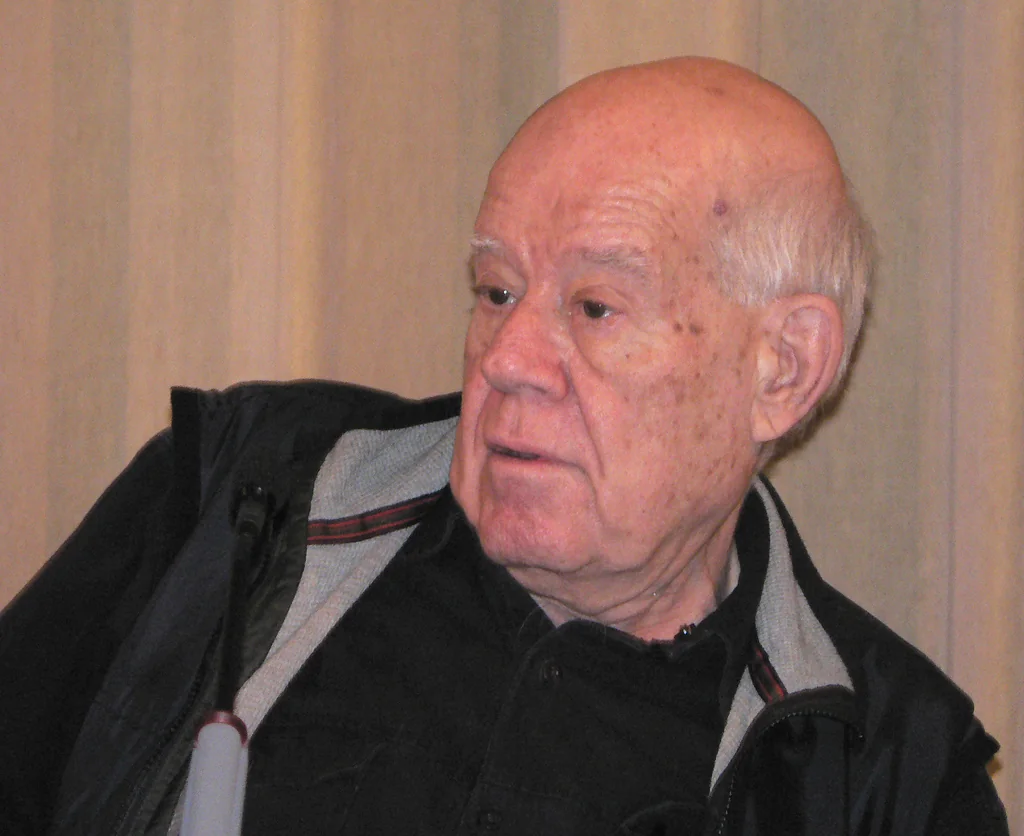
Image from Wikipedia
Image from Wikipedia
Dani Karavan – the great sculptor of space, memory, and walkable art
An artist who transformed landscape into meaning
Dani Karavan was one of the defining Israeli sculptors of the 20th and early 21st centuries and a master of large-scale, walkable artworks that set new standards for Land Art and environmental art. Born on December 7, 1930, in Tel Aviv and passing away there on May 29, 2021, he developed an artistic language in which space, history, nature, and human movement are inextricably linked. His works are not mere sculptures to be viewed, but places of experience, remembrance, and physical perception. ([danikaravan.com](https://www.danikaravan.com/biography/))
Biography: from Tel Aviv to the international art scene
Karavan grew up in Tel Aviv as the son of Abraham and Zehava Karavan; his father was the city’s landscape architect, which sharpened the artist's early perspective on public spaces, vegetation, and urban planning. He began studying painting as a teenager in Tel Aviv, continued his education with Marcel Janco and Mordechai Ardon, and later worked on Kibbutz Harel, of which he was a founding member. This early closeness to community, landscape, and a culturally charged environment profoundly influenced his artistic development. ([danikaravan.com](https://www.danikaravan.com/biography/))
In 1956, Karavan went to Florence to study fresco painting at the Accademia di Belle Arti and later moved to Paris to attend the Académie de la Grande Chaumière. The transition from painting to expansive art was not a break but an extension: Karavan transferred his thinking in surfaces, proportions, and compositions into the architecture of public space. As early as the 1960s, he began working on stage designs for theater, dance, and opera, including for the Bat-Sheva Dance Company, Martha Graham, and Gian Carlo Menotti. ([danikaravan.com](https://www.danikaravan.com/biography/))
The breakthrough: from set design to a landmark of environmental art
His first major site-specific environmental sculpture is considered the Negev Monument in Be’er Sheva, created between 1963 and 1968, which became a landmark work of environmental art. Simultaneously, Karavan created the stone relief in the Knesset's session hall in Jerusalem, which bears the programmatic title “Pray for the Peace of Jerusalem.” These early works already show his signature style: monumental, yet never empty; ideologically charged, but precise in material and form. ([danikaravan.com](https://www.danikaravan.com/biography/))
The international breakthrough followed with the Venice Biennale in 1976 and the invitation to Documenta 6 in Kassel the following year. From then on, commissions emerged in Israel, France, Germany, the USA, Korea, Taiwan, and Japan. The official biography and art historical accolades emphasize that Karavan understood space itself as artistic material – not as a neutral backdrop, but as a living, history-laden structure activated by his interventions. ([danikaravan.com](https://www.danikaravan.com/biography/))
Key works: walkable sculptures as places of memory
Some of Karavan's most notable works include Axe Majeur in Cergy-Pontoise, Passages – Homage to Walter Benjamin in Portbou, the Sinti-Roma Memorial in Berlin, the Square of Culture in Tel Aviv, and White Square, also in Tel Aviv. These works combine landscape architecture, sculpture, text, and pathfinding into a form of public memory that is not distanced, but physically experienceable. Especially in Passages, Karavan's art crystallizes into a poetic connection of place, history, and life. ([danikaravan.com](https://www.danikaravan.com/biography/))
The work descriptions on his official website illustrate how carefully Karavan worked with scale, material, and lines of sight. For instance, Axe Majeur is not simply a monument, but a spatial sequence of stations, lines, and perspectives; Way of Human Rights in Nuremberg connects an 185-meter-long pathway made of white concrete with texts from the Universal Declaration of Human Rights and a tree as a living sign. Here, art emerges from movement, slowing down, and the experience of the public. ([danikaravan.com](https://www.danikaravan.com/portfolio-item/germany-way-of-the-human-rights/?utm_source=openai))
Style and artistic development: between minimalism, memory, and Land Art
Karavan's style is characterized by clear forms, long axes, marked interventions in the topography, and a deep sensitivity to symbolic places. His works are often categorized as Land Art, yet they go beyond that, as they rely less on spectacular natural gestures and more on social and historical responsibility. The term “site-specific” frequently appears in official texts about his work; therein lies his artistic strength, as each piece responds directly to history, city, nature, and human presence. ([danikaravan.com](https://www.danikaravan.com/biography/))
His early experiences in painting, frescoes, and stage design remain perceptible in his later sculptures. Karavan thought in sequences, viewpoints, and spatial tensions; he treated public art almost like a performance without a closed narrative. Throughout, his approach remained precise and controlled: the Nuremberg recognition describes a working method where even the smallest model deviations must be irrelevant, as space for him is not an abstract concept, but an exactly readable body. ([nuernberg.de](https://www.nuernberg.de/internet/menschenrechte_e/jury_karavan_bio_en.html))
Awards, recognition, and cultural influence
Karavan received significant international awards, including the Israel Prize, the Gold Medal of the French Academy of Architecture, the Goslar Kaiserring, the first UNESCO Artist for Peace, the Praemium Imperiale, the Goethe Medal, the Premio Michelangelo, and the title of Knight of the French Legion of Honor. These honors reflect not only his stature in sculpture but also his influence on the international culture of memory and design. His art has been presented worldwide in museums, biennials, and retrospectives. ([danikaravan.com](https://www.danikaravan.com/biography/))
Karavan's cultural influence extends far beyond sculpture. He has reshaped the concept of what a monument can be: not rigid, not purely representative, but open, walkable, dialogical, and connected to the audience's experience. Especially in works related to peace, human rights, memory, and urban identity, his authority as an artist is evident, blending architecture, landscape, and collective memory into a distinctive language. ([danikaravan.com](https://www.danikaravan.com/biography/))
Current relevance and later work
Since Dani Karavan passed away in 2021, there are no new personal projects from the years 2024 or 2025. However, his presence remains strong through the ongoing reception of his works, the official website with a work and exhibition archive, and posthumous honors in museums and cultural media. This continuity shows that his oeuvre does not seem complete but continues to work as a living part of international art history. ([danikaravan.com](https://www.danikaravan.com/biography/))
Conclusion: An artist whose space must be experienced
Dani Karavan remains fascinating because his art transforms seeing into walking and memory into spatial experience. Whoever enters his works encounters not just sculpture, but a precisely composed choreography of architecture, nature, and history. This is where the greatness of this artist lies: he has created places that are not merely observed but understood with one’s own body. ([danikaravan.com](https://www.danikaravan.com/biography/))
His works merit the journey, the quiet approach, and the precise perception. Those with the opportunity should experience these walkable monuments and memorial places in person, for it is in the physical space that Karavan's art unfolds in all its power. ([danikaravan.com](https://www.danikaravan.com/biography/))
Official channels of Dani Karavan:
- Instagram: no official profile found
- Facebook: no official profile found
- YouTube: no official profile found
- Spotify: no official profile found
- TikTok: no official profile found