GlasBlasSing
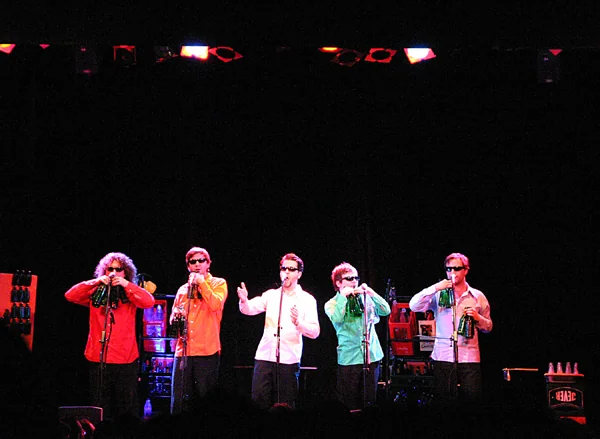
Image from Wikipedia
Image from Wikipedia
GlasBlasSing – The Art of Bottle Music Between Fringe Theatre, Cabaret, and Virtuosic Sound Acrobatics
A German music group that has created a distinctive stage world from glass, water, and rhythm
GlasBlasSing is one of the most original formations in the German-speaking fringe theatre scene: The group makes music on bottles and consistently calls this whimsical principle bottle music. Since 2003, they have been performing in Germany, Austria, and Switzerland and have evolved from a curious yet precise idea into a substantial presence in live entertainment, musical comedy, and handcrafted stage performance. The appeal lies not only in the concept but also in the precision with which the band forms its own language of sound from simple everyday objects. ([de.wikipedia.org](https://de.wikipedia.org/wiki/GlasBlasSing))
The Idea: From a Youth Musical to a Language of Music
The roots of GlasBlasSing date back to 2002 when David Möhring, Andreas Lubert, Frank Wegner, and Jörg Wegner came up with the idea of making music with bottles while working on a youth musical. What initially seemed like a quirky idea developed over the following years into a viable artistic concept. The band understood early on that their bottle music would not work as a gimmick but only if rhythm, timing, arrangement, and live presence were taken as seriously as in any other professional music production. ([de.wikipedia.org](https://de.wikipedia.org/wiki/GlasBlasSing))
From 2003 onwards, GlasBlasSing initially performed as street musicians in Berlin and then in pedestrian zones in Germany, Belgium, France, and the Netherlands. This phase profoundly shaped the stage routine of the group: Direct feedback, close proximity to the audience, and the necessity to capture attention in loud, open spaces sharpened their sense of dramaturgy and audience impact. Even at this stage, the group's special strength became apparent: an unusual instrumental setup that not only generates attention but also carries musicality. ([de.wikipedia.org](https://de.wikipedia.org/wiki/GlasBlasSing))
From Street Audience to Professional Tour Band
In spring 2006, GlasBlasSing turned bottle music into their profession and has been touring with their program throughout the German-speaking world since then. Their first significant artistic manifestation, Liedgut auf Leergut, premiered in October 2006. This was followed by further stage programs, including Keine Macht den Dosen, which premiered at the Quatsch Comedy Club Berlin in October 2009, as well as an appearance at the Arosa Humor Festival in the same year. The group deftly navigated between music, comedy, and cabaret – always focusing on live-generated sound art. ([de.wikipedia.org](https://de.wikipedia.org/wiki/GlasBlasSing))
An important moment was their performance as part of the city wager on Wetten, dass..? on February 12, 2011. In the years 2011 and 2012, the band also produced their own TV show, Die GlasBlasSing Quintett Show, for zdf kultur and 3sat, featuring guests such as Michael Hatzius. This media presence solidified the group's reputation as an extraordinary live formation, transforming a niche idea into a professional stage format. ([de.wikipedia.org](https://de.wikipedia.org/wiki/GlasBlasSing))
Band Development, Line-Up Changes, and New Formation
Since September 2013, GlasBlasSing has been touring with their third program, Männer, Flaschen, Sensationen, which premiered at the Berliner Wühlmäuse. From 2015 onwards, the group toured with Volle Pulle – Flaschenmusik XXL, followed later by the Christmas program Süßer die Flaschen nie klingen. In September 2017, it was announced that Jens Peter Tangermann would leave the band by the end of the year; in March 2022, Frank Wegner also departed, and since then, GlasBlasSing has performed as a trio. This development illustrates a formation that does not define itself statically but maintains its identity through concept, sound, and live energy. ([de.wikipedia.org](https://de.wikipedia.org/wiki/GlasBlasSing))
The current lineup showcases the signature of a tight-knit stage formation with clearly defined roles: bottles, percussion, vocals, and special instruments are created from glass-blowing bottles, plastic bottle tubas, crown cap castanets, bass bottle bars, snare variants, and other self-built sound bodies. This material aesthetic makes the group exciting for music lovers: GlasBlasSing combines instrument construction, performance, humor, and arrangement into a distinct sound universe. ([de.wikipedia.org](https://de.wikipedia.org/wiki/GlasBlasSing))
Discography: Key Programs as Auditory Milestones
The discography of GlasBlasSing is closely linked to the stage shows and documents the artistic development of the group over almost two decades. The released programs include Liedgut auf Leergut (2006), Keine Macht den Dosen Teil1 (2010), Männer, Flaschen, Sensationen (2013), Volle Pulle (2015), and Happy Hour (2020). These titles seem playful but mark real developmental milestones: from the initial idea to the consolidation of a stage sound and the maturation of an ensemble that knows its means precisely. ([de.wikipedia.org](https://de.wikipedia.org/wiki/GlasBlasSing))
Particularly interesting is the continuous shift between recognizability and variation. GlasBlasSing does not work with a classic pop discography but with programs that are simultaneously concert, show, and conceptual performance. This creates a form of musical storytelling that relies less on chart placements and more on live impact, word-of-mouth, and the quality of the stage moment. ([de.wikipedia.org](https://de.wikipedia.org/wiki/GlasBlasSing))
Style: Bottle Music as Arrangement Art
At the center of GlasBlasSing lies a concept that is as simple as it is sophisticated: Bottles filled with varying amounts of water or completely empty produce tones, rhythms, and percussive structures. The group expands this principle by incorporating glass, plastic, metal, and everyday objects, creating a precise choreography of tapping, blowing, popping, shaking, tinkling, plucking, crackling, and clattering. The result is neither pure comedy nor mere experiment, but a specially developed form of ensemble music with high recognizability. ([de.wikipedia.org](https://de.wikipedia.org/wiki/GlasBlasSing))
Musically, GlasBlasSing stands within a tradition in which estrangement and material sound become the actual program. The group translates everyday objects into instruments, creating an access point that is both playful and artistically demanding. The combination of humor, physical stage work, and musical structure is precisely what makes their work appealing: the audience experiences not just a gag but a precisely composed live performance. ([de.wikipedia.org](https://de.wikipedia.org/wiki/GlasBlasSing))
Awards and Recognition in the Fringe Theatre Scene
GlasBlasSing has received multiple awards and was recognized early on as a competition participant. Notable milestones include a second place and audience award at TAM Obelisk 2004, victories at street music and fringe theatre competitions in 2005 and 2006, as well as the newcomer award in 2008 in the music category. Additional accolades include the Special Award of the Tuttlinger Krähe 2009, the Thüringer Kleinkunstpreis 2010, and the Schwerter Kleinkunstpreis 2011 for Keine Macht den Dosen. These honors demonstrate that the group is perceived not only as a curiosity but as a serious live formation with a strong artistic profile. ([de.wikipedia.org](https://de.wikipedia.org/wiki/GlasBlasSing))
Current Projects and Tour Activity
The official website still shows GlasBlasSing as an active touring band with extensive dates in Germany and beyond. Included are programs like Happy Hour, the format Kästen raus - Flaschenarbeit, and the Christmas program Süßer die Flaschen nie klingen. The ongoing dates for 2026 and 2027 indicate a strong presence in the live arena and a stable demand for the extraordinary stage concept. ([glasblassing.de](https://www.glasblassing.de/?utm_source=openai))
There are no concrete indications of new studio albums or major releases in 2024 and 2025 in the verified sources. Instead, the focus is visibly on developing the stage repertoire, on tours, and on nurturing the core brand: bottle music as a standalone concert form. This concentration on live performance seems credible and aligns with the band's identity. ([glasblassing.de](https://www.glasblassing.de/?utm_source=openai))
Cultural Influence: Why GlasBlasSing Stays in the Mind
GlasBlasSing has given a distinctive color to German-speaking fringe theatre. The group demonstrates that musical innovation does not necessarily have to arise from electronic production or highly complex studio techniques but can equally stem from artisanal imagination, timing, and stage experience. For the audience, this creates an immediate experience: They see sound being created, understand its material, and yet experience real musical tension. ([de.wikipedia.org](https://de.wikipedia.org/wiki/GlasBlasSing))
Even in perceptions outside the scene, the band acts as an invitation to rethink music. GlasBlasSing combines entertainment with amazing discipline, comedy with arrangement awareness, and a nearly childlike joy in sound with professional touring practice. This is precisely where the unique strength of this artistic side lies: It tells not just about a band but about a consistently developed idea that has been functioning and thriving for years. ([de.wikipedia.org](https://de.wikipedia.org/wiki/GlasBlasSing))
Conclusion: A Live Experience That Creates Genuine Wonder from Everyday Objects
GlasBlasSing remains exciting because the group has created a resilient artistic identity from an unusual concept. Between bottles, water, rhythm, and humor, a stage emerges that only fully unfolds its impact through direct experience. Those who love music that surprises with imagination, precision, and charm should see GlasBlasSing live. ([de.wikipedia.org](https://de.wikipedia.org/wiki/GlasBlasSing))
Official Channels of GlasBlasSing:
- Instagram: https://www.instagram.com/glasblassing/
- Facebook: https://www.facebook.com/GlasBlasSing
- YouTube: https://www.youtube.com/user/glasblassing
- Spotify: no official profile found
- TikTok: no official profile found
Sources:
- GlasBlasSing – Official Website
- GlasBlasSing – Impressum
- Wikipedia – GlasBlasSing
- YouTube – GlasBlasSing
- Facebook – GlasBlasSing
- Instagram – GlasBlasSing
- Wikipedia: Image and Text Source
Upcoming Events
GlasBlasSing “Get the boxes out - Bottle work”