
Sofia Fränkl
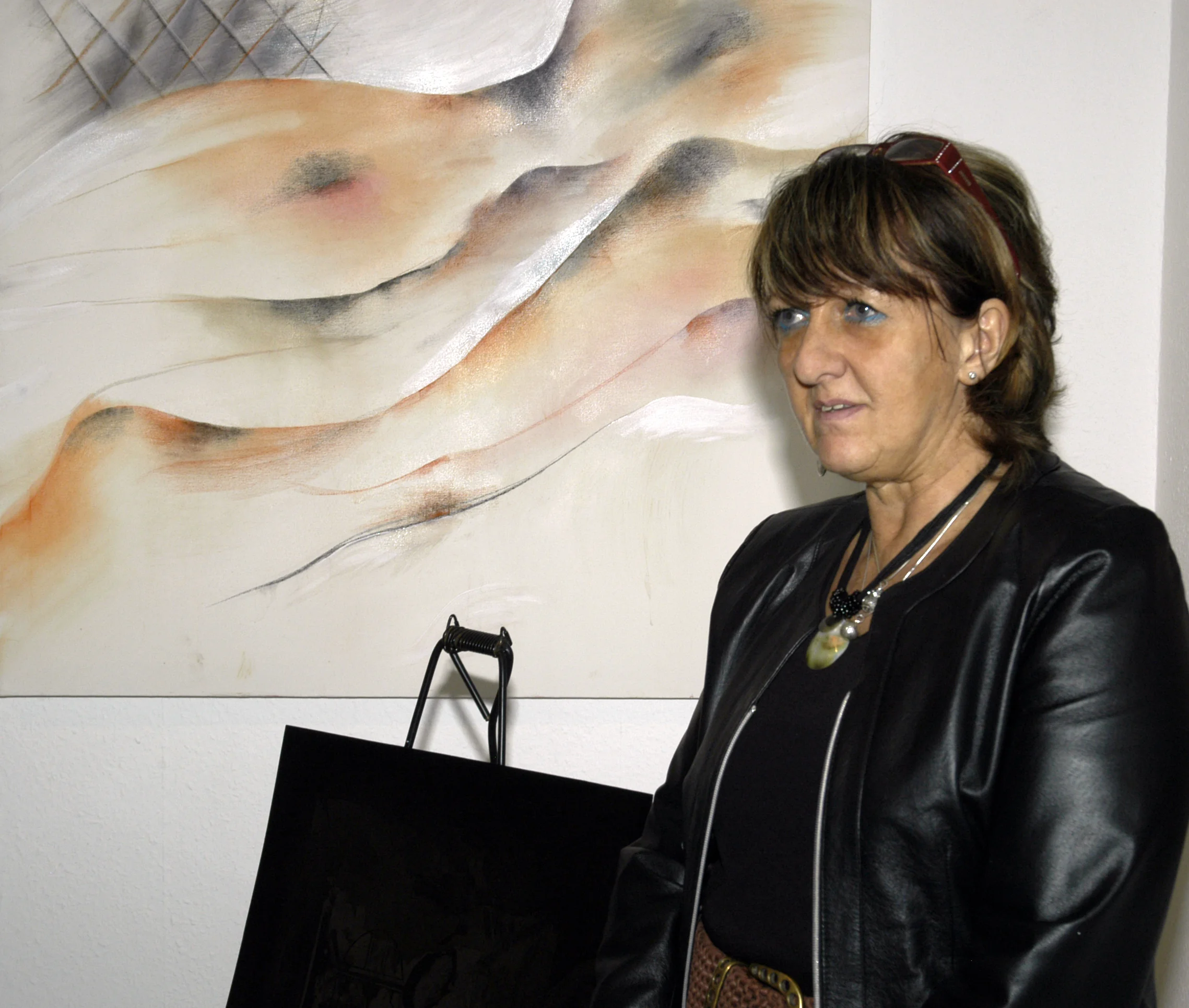
Image from Wikipedia
Image from Wikipedia
Sofia Fränkl: The Vibrant Workshop of Printmaking Between Dürer, Nuremberg, and European Art History
An artist who combines craftsmanship, memory, and museum work into a unique language
Sofia Fränkl, born in 1948 in Arad, Transylvania, is one of the notable German-Hungarian artists of her generation. As a graphic artist, painter, and engraver, she exemplifies a practice where precise craftsmanship, historical awareness, and vibrant communication form a rare unity. Her biography is closely linked to printmaking and an artistic attitude that doesn't aim for quick effects but rather for endurance, concentration, and technical depth. ([de.wikipedia.org](https://de.wikipedia.org/wiki/Sofia_Fr%C3%A4nkl?utm_source=openai))
Biography: Training between Timișoara and Bucharest
Fränkl completed her diploma at the Academy of Fine Arts in Timișoara and Bucharest. This academic formation serves as the starting point for a body of work that has always moved within the tension of drawing, painting, and graphic reproduction. The biographical path from Transylvania to Bucharest and later to Nuremberg also reflects an artistic movement across cultural spaces that continues to shape her work today. ([de.wikipedia.org](https://de.wikipedia.org/wiki/Sofia_Fr%C3%A4nkl?utm_source=openai))
She lived in Bucharest until 1991, after which she settled in Nuremberg. There, she opened her own art gallery in 1996, creating a place where production, presentation, and communication come together. This decision marks not only a change of location but a professionalization of her artistic presence within the German-speaking art scene. ([de.wikipedia.org](https://de.wikipedia.org/wiki/Sofia_Fr%C3%A4nkl?utm_source=openai))
Career: From Exhibition Artist to Mediator of Historical Print Techniques
Fränkl has been presenting herself as an artist with international exhibition experience for decades. Her life stages and exhibition notes include stops in Kanagawa, Nagasaki, and Tokyo, later in Antwerp and Barcelona, as well as in Detroit and Toronto; additionally, she has presented works in Paris, Rome, and Cologne. These stops illustrate a career that extends well beyond the local scene and places her work in a European and international context. ([de.wikipedia.org](https://de.wikipedia.org/wiki/Sofia_Fr%C3%A4nkl?utm_source=openai))
Particularly formative is her role in the "Living Museum" program of the Albrecht Dürer House in Nuremberg, which she has supported since 1998. There, she demonstrates with the engraving burin on copper plates how the old reproduction techniques from Dürer's time function, showing visitors the creation of engravings directly from the historical model. Thus, an artist becomes a lively mediator of art history. ([de.wikipedia.org](https://de.wikipedia.org/wiki/Sofia_Fr%C3%A4nkl?utm_source=openai))
Work and Technique: Engraving as a School of Patience
The engraving forms the center of Sofia Fränkl's artistic profile. In the workshop reports, it is described how she demonstrates the processing of copper plates with the burin, vividly illustrating the production methods of the Renaissance. It is precisely this combination of exact technique, historical reference, and performative mediation that makes her work so characteristic. ([de.wikipedia.org](https://de.wikipedia.org/wiki/Sofia_Fr%C3%A4nkl?utm_source=openai))
The representation in the Nuremberg museum work also emphasizes that Fränkl creates prints "in the style" of Dürer's works and shows her own engravings based on Dürer’s motifs. Her work thus consciously engages in dialogue with art history, without being merely a reconstruction. It is about appropriation, translation, and the question of how historical visual worlds can be newly interpreted in the present. ([kunstkulturquartier.de](https://www.kunstkulturquartier.de/kunsthaus/suchergebnis/veranstaltungen-detail/382353/0/0/2671/2026-05-09/11-00?cHash=f830bd6044b56b6e93248a261bc3a3f6&utm_source=openai))
Exhibitions and International Visibility
Documented steps in her exhibition history include presentations in Japan in 1978, Belgium and Spain in 1980, and North America in 1982. For 1988 and 1989, exhibitions at the Romanian Academy in Paris and Rome are noted, as well as in 1998 at the International Institute for Culture in Cologne. This chronology showcases an artist whose work has been recognized across various cultural spaces over decades. ([de.wikipedia.org](https://de.wikipedia.org/wiki/Sofia_Fr%C3%A4nkl?utm_source=openai))
Later references also confirm her ongoing presence: The Brukenthal Museum points to a work that Fränkl created in the studio of the Dürer Museum, and the Nuremberg KunstKulturQuartier announces workshop and demonstration formats with her even in more recent years. Her art thus lives not only in exhibitions but also in public demonstrations and museum practices. ([brukenthalmuseum.ro](https://www.brukenthalmuseum.ro/expozitii/detaliu_en/830?utm_source=openai))
Artistic Development: Between Graphics, Painting, and Cultural Memory
As a graphic artist, painter, and engraver, Fränkl simultaneously operates in several artistic disciplines. It is precisely the combination of these media that creates a signature where line, surface, structure, and materiality are closely interrelated. Her work shows how strongly an artistic development depends on technique, repertoire, and cultural memory when pursued consistently over years and decades. ([de.wikipedia.org](https://de.wikipedia.org/wiki/Sofia_Fr%C3%A4nkl?utm_source=openai))
The connection to Albrecht Dürer is not merely a decorative reference but a central aesthetic program. Fränkl works not only with historical methods but also with their communicative value: she explains, shows, demonstrates, and makes visible how printmaking is created. As a result, art becomes a space of experience and the audience an actively learning public. ([museums.nuernberg.de](https://museums.nuernberg.de/albrecht-duerer-house/permanent-exhibition/the-living-workshop/?utm_source=openai))
Significance and Cultural Influence
Sofia Fränkl is an artist whose significance also lies in the preservation of artisanal cultural techniques. In an age where visual content often circulates fleetingly, her work defends the slowness of graphic work, the precision of materials, and the dignity of manual execution. This defines her cultural relevance: she keeps alive a knowledge that is easily overshadowed in the digital age. ([museums.nuernberg.de](https://museums.nuernberg.de/albrecht-duerer-house/permanent-exhibition/the-living-workshop/?utm_source=openai))
Her role at the Albrecht Dürer House and her connection to Nuremberg's art landscape make her a defining figure in the mediation of printmaking. The fact that she has been introducing visitors to the creation of engravings for many years adds an additional dimension to her career: Fränkl is not just a producer of art, but also a guardian of cultural experiential knowledge. ([museums.nuernberg.de](https://museums.nuernberg.de/albrecht-duerer-house/visitor-services/events/printing-demonstration?utm_source=openai))
Conclusion: An artist who not only shows history but embodies it
Sofia Fränkl is compelling because she understands art not as a surface but as a process. Her career connects training, international exhibition experience, her own gallery work, and museum mediation into a profile of remarkable coherence. Anyone who experiences her work encounters an artist who unites technical mastery and cultural depth with rare consistency. A visit to her demonstrations and presentations is worthwhile, as there art history is not explained but made directly experienceable. ([de.wikipedia.org](https://de.wikipedia.org/wiki/Sofia_Fr%C3%A4nkl?utm_source=openai))
Official Channels of Sofia Fränkl:
- Instagram: no official profile found
- Facebook: no official profile found
- YouTube: no official profile found
- Spotify: no official profile found
- TikTok: no official profile found
Sources:
- Wikipedia – Sofia Fränkl
- Vatra MCP – Sofia FRÄNKL, graphic artist
- KunstKulturQuartier Nuremberg – Event details
- Museums Nuremberg – The Living Workshop
- Museums Nuremberg – Printing demonstration with artist Sofia Fränkl
- Brukenthal Museum – Exhibition: 3 Brukenthal Centuries, European Art 1500-1800
- HAWK – Experiencing Art History: Visit to Dürer's Workshop
- Abendzeitung Nuremberg – How Albrecht Dürer printed: Historical demonstrations in Nuremberg
Upcoming Events
Printing Like in Dürer's Time